Best Snow Blowers 2026: Tested by Driveway Size & Snow Depth
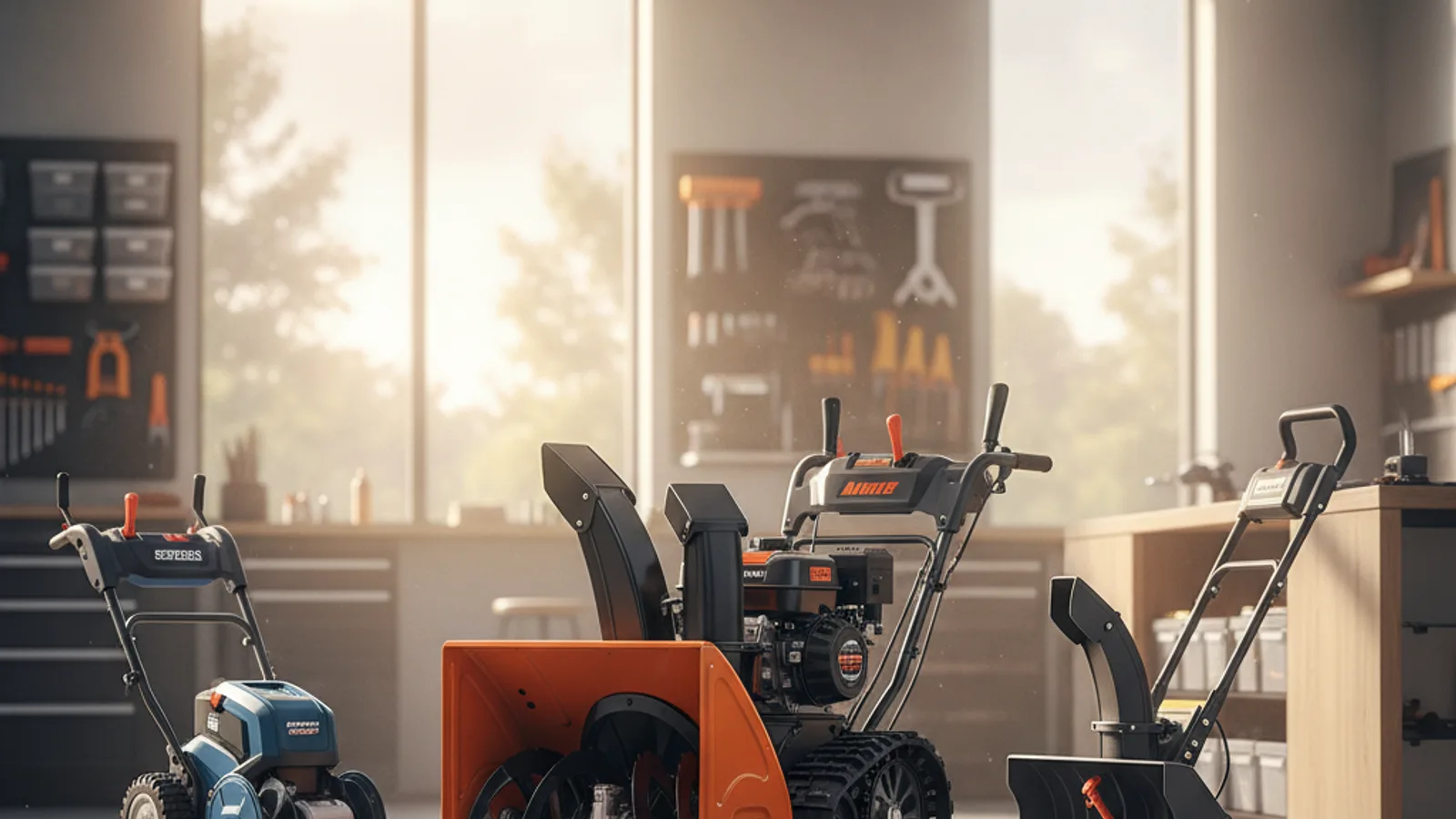
A snow blower is one of the highest-ROI outdoor power tools you can own if you live in a snow-belt region, it turns a 45-minute back-breaking shovel job into a 10-minute task. The wrong machine, though, either can't handle your snow depth or is overkill for a short flat driveway. The right choice depends on three variables: driveway length and surface type, typical snow depth per storm, and whether you value zero-maintenance convenience (battery/electric) or maximum raw clearing power (gas).
This guide covers every real use case with a concrete pick for each, from a compact battery blower for a condo walkway to a Honda-powered two-stage for a 150-foot gravel driveway.
At a Glance
 Snow Joe Corded Electric Snow Blower, 22 Clearing...
 EGO SNT2405 24" Cordless Snow Blower Kit, Self...
 Ariens 921049 Deluxe 30 in. EFI 2-Stage Snow Thrower,...
 Honda HSS724 23.8-Inch Two Stage Snow Blower with...
 Ariens Gas-Powered Walk-Behind Snow Blower, Gas, 20 in...
Product images and titles from Amazon. As an Amazon Associate we earn from qualifying purchases.
Quick Picks by Use Case
| Use case | Best Pick | Why | Price |
|---|---|---|---|
| Best overall two-stage gas | Ariens Compact 24 Two-Stage | 306cc AX engine, 24” cut, electric start, compact footprint | $750–900 |
| Best budget corded electric | Snow Joe SJ627E 22” 14.5A | No fuel, instant start, short flat driveways up to 6” snow | $160–210 |
| Best single-stage gas | Toro Power Clear 721 E 21” | 212cc 4-cycle, self-propels, cleans pavement flush | $500–600 |
| Best cordless/battery | EGO SNT2135 21” 56V | Battery runtime up to 45 min, zero gas/oil, push-button start | $400–550 (bare) |
| Best value two-stage gas | Troy-Bilt Storm 2410 24” 208cc | 24” two-stage with electric start under $600 | $550–700 |
| Best battery two-stage | EGO SNT2405 24” Two-Stage | Handles 18” snow, battery convenience at gas performance | $700–900 (kit) |
| Best premium two-stage | Ariens Deluxe 30” Two-Stage | 30” clearing, heated grips, 12 speed, commercial-capable | $900–1,100 |
| Best pro/Honda engine | Honda HSS724ATD 24” Two-Stage | Honda OHC engine, power steering, hydrostatic drive, electric start | $1,300–1,600 |
Single-Stage vs. Two-Stage vs. Battery: Which Type Do You Need?
Single-stage snow blowers use one auger that simultaneously breaks up snow and throws it. The auger contacts the ground, so they only work on paved surfaces (concrete or asphalt), not gravel, which they'd fling at your face. They clear 18–22 inches of width and handle up to 8–10 inches of snow efficiently. They're lighter (40–60 lbs), cheaper ($200–600), and best for short, flat driveways under 40 feet. Self-propelled models reduce push effort on longer runs.
Two-stage snow blowers use a separate auger (to collect snow) and impeller fan (to throw it). The auger doesn't contact the ground, which makes two-stage safe on gravel and more effective on compacted or icy snow. They handle 12–24+ inches of snow, clear 24–32 inches of width per pass, and weigh 150–300 lbs with self-propelled drive systems. For anyone with a gravel driveway, heavy snowfall regions, or a driveway longer than 50 feet, a two-stage is the right class.
Battery/cordless snow blowers now span both categories. Single-stage battery units (EGO SNT2135, Ryobi 40V) run 35–50 minutes per charge and match single-stage gas for most homeowner driveways. Battery two-stage units (EGO SNT2405) genuinely compete with gas two-stage for typical residential snowfall. The main limits: performance drops in very heavy or wet snow, and runtime requires either a spare battery or a short driveway.
The 8 Best Snow Blowers of 2026
Ariens Compact 24 Two-Stage Gas Snow Blower (306cc)
The Ariens Compact 24 is the most-recommended homeowner two-stage for a reason: it delivers commercial-grade clearing power (306cc AX engine, 24-inch clearing width, 20-inch intake height) in a machine compact enough to store in a standard single-car garage. The 306cc AX engine exceeds what most competitors offer at this price point, handling wet heavy snow and compacted drifts that bog down 208cc units. Six forward speeds and two reverse speeds plus electric start (110V or battery) make it usable without brute effort.
The single-hand cab controls allow operators to steer while keeping a thumb on the drive clutch lever, a major ergonomic win on long driveways. The steel auger and steel impeller (not plastic, unlike budget units) hold up through gravel debris and freeze-thaw cycles. Ariens has a strong dealer network for service and parts, unlike some Amazon-native brands. If you're buying one two-stage gas blower to last 10+ years, this is it.
Pros
- 306cc AX engine handles wet, heavy, compacted snow
- Single-hand cab controls, steer with one hand
- Electric start (110V plug-in or key)
- Steel auger and impeller for long-term durability
- Compact enough for single-car garage storage
Cons
- Heavier than single-stage options (~200 lbs)
- More expensive than value two-stage alternatives
- Requires annual oil change and pre-season fuel prep
Snow Joe SJ627E 22” 14.5-Amp Corded Electric Snow Blower
For homeowners with a short flat driveway, a garage pad, or a long walkway who get moderate snowfall (up to 6 inches regularly), the Snow Joe SJ627E is the most cost-effective snow clearing solution on the market. At 22 inches wide with a 14.5-amp motor, it moves 660 lbs of snow per minute and throws it up to 20 feet. The foldable handle locks into the auger for upright garage storage, it occupies less space than a full-size gas blower by a significant margin.
There's no oil, no fuel, no carb to gum up, and no pull-cord. Plug it in, push a button, and it runs. That simplicity is the whole value proposition. The auger touches the ground, so use it only on concrete or asphalt, not gravel driveways. The 50-foot extension cord (sold separately) is required for anything beyond a short walkway. Don't use the SJ627E for deep (8+) or wet heavy snow, that's what the two-stage picks are for. For the right use case, it's the cheapest thing that actually works.
Pros
- Lowest entry price for an effective snow blower
- Zero maintenance: no oil, no fuel, no carb cleaning
- Folds upright for compact storage
- Instant push-button start every time
- Quiet vs. gas models
Cons
- Cord limits range, need a 50-ft outdoor extension cord
- Paved driveways only (auger contacts ground)
- Struggles with snow above 8” or wet, heavy snow
- 22” width means more passes on wider driveways
Toro Power Clear 721 E 21” Single-Stage Gas Snow Blower
The Toro Power Clear 721 E is the best single-stage gas blower for homeowners who want gas reliability without the weight and cost of a two-stage. The 212cc Toro-branded 4-cycle OHV engine is reliable in cold weather and requires no fuel mixing (no 2-stroke oil). The self-propelling Power Propel system means the machine moves itself, you guide it rather than push it. The rubber-padded auger cleans pavement flush without scratching the surface, leaving almost zero snow behind on each pass.
The 21-inch clearing width and 13-inch intake height handle up to 9 inches of snow efficiently. Electric start (key) makes winter morning startups stress-free. The Quick Stick chute control lets you redirect the throw with one hand while walking. At 70 lbs, it's light enough to lift into a truck bed. For paved driveways under 60 feet that regularly see 6–9 inch snowfalls, the Power Clear 721 E is the best single-stage machine available.
Pros
- 212cc 4-cycle OHC engine, no fuel mixing, reliable starts
- Self-propelled, machine moves itself
- Rubber-tipped auger scrapes pavement clean
- Quick Stick single-hand chute control
- Electric key start
Cons
- Single-stage only: paved driveways, not gravel
- 13” intake depth limits use in 10”+ snowfall
- Annual oil change and fuel prep required
- More expensive than corded electric at similar width
EGO Power+ SNT2135 21” 56V Battery Snow Blower
The EGO SNT2135 is the best battery snow blower for homeowners who want zero gas and oil maintenance without sacrificing real clearing performance. On a 7.5Ah 56V ARC Lithium battery, it delivers up to 45 minutes of runtime, enough for most residential driveways in one charge. The 56V brushless motor drives the auger at a rate that handles snow depths up to 12 inches and throws it up to 35 feet.
EGO's battery ecosystem means the same 56V batteries power over 70 EGO tools (mowers, trimmers, leaf blowers), if you already own EGO tools, adding the SNT2135 bare-tool is the best investment-per-dollar. The LED headlights, 180-degree chute rotation, and push-button start make it genuinely more convenient than any gas blower at this size. On a cold morning (-10°F), EGO batteries start instantly while gas blowers may require multiple pull-cord attempts. The main caveat: in very wet heavy snow (March rain-snow mix), the auger can bog down, for those conditions, a two-stage gas blower is still superior.
Pros
- Up to 45 min runtime on 7.5Ah battery
- Push-button start every time, even at -10°F
- Zero gas, oil, carb, or pull-cord
- Compatible with 70+ EGO 56V tools (battery interchangeability)
- LED headlights for early-morning clearing
Cons
- Battery cost adds up if starting from zero (kit vs. bare tool)
- Can bog in wet, heavy, March-type snow
- Runtime limits very large driveways to two-battery strategy
Troy-Bilt Storm 2410 24” 208cc Two-Stage Gas Snow Blower
The Troy-Bilt Storm 2410 is the best-value entry point into true two-stage snow clearing. Its 208cc OHV engine, 24-inch clearing path, and 21-inch intake height handle 12–16 inch snowfalls and gravel driveways, the jobs a single-stage can't touch. Electric start (with battery backup) is standard. Six forward speeds and two reverse speeds provide real maneuvering control. The two-stage design means the auger doesn't contact the ground, making it gravel-driveway safe.
Where it sacrifices versus the Ariens Compact 24: the 208cc engine is smaller (adequate for typical snowfall, less headroom for wet heavy dumps), the steel quality is lighter, and the dealer service network is thinner. For homeowners in snowfall regions that regularly see 8–14 inch storms who want a capable two-stage without paying Ariens prices, the Storm 2410 is the most logical choice. Buy the extended warranty if offered, at this price tier, it's worth it.
Pros
- 24” two-stage clearing handles gravel driveways
- Electric start with battery backup
- 208cc engine handles 12”+ snowfalls
- Lowest price in true two-stage category
- 6 forward speeds, 2 reverse
Cons
- 208cc can bog in very heavy wet snow vs. 306cc units
- Lighter build quality than Ariens at this tier
- Thinner dealer service network for repairs
EGO Power+ SNT2405 24” Two-Stage Battery Snow Blower
The EGO SNT2405 is the best battery-powered two-stage blower and the clearest sign that gas isn't the only option anymore for serious snowfall. Powered by two 7.5Ah 56V batteries running in parallel, it clears a 24-inch path to 18 inches of snow depth and throws it up to 50 feet. The two-stage design (separate auger and impeller) means it can handle gravel driveways, unlike single-stage battery units. Runtime is approximately 45–60 minutes on two fully charged 7.5Ah batteries, enough for most two-car driveways with room to spare.
The SNT2405 won't match the peak power of a 306cc Ariens in the deepest, wettest snow, nothing battery-powered will yet. But for a homeowner who values no-startup-headache mornings, no fuel storage, no carburetor gumming, and an ecosystem shared with 70+ other EGO tools, the SNT2405 makes a compelling case as a one-machine solution for most residential snowfall conditions. The initial cost is high (factor in battery cost if not already EGO users), but the 5-year tool and 3-year battery warranty justify the long-term math.
Pros
- Two-stage handles gravel driveways and 18” snow depths
- 45–60 min runtime (dual 7.5Ah batteries)
- Push-button start, no fuel or oil ever
- 5-year tool warranty, 3-year battery warranty
- EGO 56V battery ecosystem (70+ compatible tools)
Cons
- Highest price in battery category (especially with batteries)
- Doesn't match 306cc+ gas power in extreme 20”+ wet snow
- Runtime degrades in extreme cold (<−15°F) if batteries are cold-stored
Ariens Deluxe 30” Two-Stage Gas Snow Blower (306cc)
For homeowners with long driveways (100+ feet), wide two-car-plus configurations, or who regularly face 18–24 inch snowfalls, the Ariens Deluxe 30 is the premium residential standard. The 30-inch clearing width means significantly fewer passes: a standard two-car driveway (18 feet wide) takes 7 passes vs. 9 with a 24-inch unit. The 306cc AX engine powers through the deepest, wettest snow without bogging. Heated hand grips are standard, meaningful at 5 AM in January. Twelve forward speeds (vs. six on the Compact) give precise ground speed control on icy or sloped surfaces.
The Ariens Auto-Turn system (available on some Deluxe models) uses differential steering to automatically slow the inside wheel during turns, dramatically reducing the effort required to redirect a 250-lb machine. The Deluxe 30 is the last snow blower you'll ever need to buy. It's significantly heavier and harder to store than the Compact 24, so measure your garage door clearance and verify you have the overhead clearance to tilt it back for the shortest footprint storage position.
Pros
- 30” clearing width, fewer passes on wide driveways
- 306cc AX engine handles 24” snowfalls and heavy wet snow
- Heated hand grips standard
- 12 forward speeds for precise pace control
- Ariens dealer network for long-term service
Cons
- Heavier and wider than Compact 24, harder to store
- Overkill for driveways under 60 feet
- Higher price point than value alternatives
Honda HSS724ATD 24” Two-Stage Snow Blower
The Honda HSS724ATD is the mechanical peak of residential snow blowers. Honda's 196cc OHC (overhead cam) engine starts reliably at temperatures where most competitors struggle, runs cleaner, and lasts longer with less maintenance than OHV engines. The hydrostatic drive (instead of a gear-transmission) delivers infinitely variable ground speed controlled by a single hand lever, you dial in exactly the pace you want rather than clicking through preset gears. Honda's electric power steering redirects the machine with minimal physical effort, which matters when you're making dozens of turns on a long driveway.
The 24-inch clearing path, 23-inch intake height, and dual-stage auger system handle everything from 2-inch dustings to 24-inch drifts on any surface including gravel. Heated grips and LED lights are standard. Honda's dealer and service infrastructure is the deepest in the industry, parts and trained technicians exist in virtually every snow-belt metro. This machine is recommended for anyone who runs a snow removal business or simply refuses to deal with equipment failures. At $1,300–1,600, it's one purchase that eliminates the category permanently.
Pros
- Honda OHC engine, most reliable engine class in snow blowers
- Hydrostatic drive: infinitely variable ground speed
- Electric power steering, effortless direction changes
- Gravel-safe two-stage design
- Honda service network: parts and technicians everywhere
Cons
- Highest price in residential category
- 24” width, same as value options at 2× the price
- Overkill for typical residential use (you're paying for engine longevity)
Snow Blower Size & Type Decision Guide
| Driveway / Situation | Snow Depth | Right Type | Minimum Width |
|---|---|---|---|
| Short walkway or 1-car pad | Up to 6” | Corded electric | 18–22” |
| 1-car driveway, flat, paved | Up to 9” | Single-stage gas or battery | 21” |
| 2-car driveway, flat, paved | Up to 12” | Battery single-stage or two-stage | 21–24” |
| 2-car driveway, gravel or sloped | Any depth | Two-stage gas (required for gravel) | 24” |
| Long driveway (80–150 ft) | 12”+ | Two-stage gas, 24–28” | 24” |
| Very long / rural driveway | 18”+ wet & heavy | Two-stage gas, 28–32”, 300cc+ | 28” |
| Snow removal business / commercial | Any | Pro two-stage or tractor attachment | 30”+ |
Essential Snow Blower Accessories
- Fuel stabilizer (STA-BIL or Sea Foam), The single most important thing you can do to preserve a gas snow blower. Add it every tank during the season and fill a full tank before spring storage. Ethanol-blended fuel degrades in 30 days and gums carburetors. A $10 bottle prevents the most common off-season storage failure.
- Snow blower storage cover, Protects against dust, UV, and rodent nesting during the 7-month off-season. Waterproof covers with elastic hems fit all size classes. Rodent chewing of rubber seals and wiring is a surprisingly common failure mode for unprotected garage equipment.
- Replacement chute deflector / flap, Plastic chute deflectors crack in cold temperatures and are a common replacement part after a few seasons. Buying a spare before you need it means 10 minutes to fix versus hunting for the right part during a storm week.
- Shear pin and bolt kit, Shear pins are designed to break when the auger hits a buried rock, frozen hose, or hidden sprinkler head, protecting the gearbox. Keep a kit in your garage; a broken shear pin mid-storm requires a 5-minute fix if you have the part, or a dead machine if you don't. Match to your blower brand and model.
- 50-foot 14-gauge outdoor extension cord, Required for corded electric blowers. Use a 14-gauge (or heavier) outdoor-rated cord, anything lighter than 16-gauge causes voltage drop that reduces motor power and risks overheating at the plug. A 50-foot cord reaches most residential driveways from a garage outlet.
- Small engine oil and funnel set, Two-stage gas blowers require seasonal oil changes (SAE 5W-30 is standard for cold-weather operation). A small funnel and quart of the right viscosity oil stored in the garage makes the 10-minute annual oil change actually happen before it matters.
4 Snow Blower Mistakes That Cause Damage
- Storing with ethanol fuel in the tank over summer. Modern fuel (10% ethanol) degrades in 30–60 days. Left in the carburetor for 7 months, it turns into varnish that clogs jets and passages, the #1 reason snow blowers don't start. Either drain the tank completely in spring, or run fuel stabilizer and store with a full tank to prevent condensation moisture. Half-measures (old fuel with no stabilizer) are worse than nothing.
- Using a single-stage on a gravel driveway. The auger of a single-stage blower contacts the surface, it will throw gravel at 35+ mph like a shotgun. Use a two-stage on any unpaved surface, set the skid height so the auger clears the surface by 1–2 inches, or shovel the first few inches by hand if using a single-stage on borderline surfaces.
- Blowing snow upwind. Adjust the chute to throw with the prevailing wind or perpendicular to it. Throwing upwind defeats the blower and sprays snow back at you. On tight driveways with nowhere to blow, alternate passes throwing toward each edge, not back over previously cleared areas.
- Hitting extension cords, hoses, or chains buried in snow. Keep a mental map of buried obstacles before clearing. Extension cords and garden hoses become projectiles through a single-stage auger. Buried log chains or frozen tire tracks can break shear pins or, in the worst case, damage the gearbox. Clear the area on foot before the first pass.
Frequently Asked Questions
Single-stage or two-stage for my driveway?
Single-stage for short, flat, paved driveways with snowfalls under 8 inches. Two-stage for gravel driveways, slopes, driveways over 50 feet, or regions with 12+ inch snowfall events. Two-stage also handles compacted and icy snow better since the auger doesn't need to contact the surface.
How wide a snow blower do I need?
21–22 inches for single-car driveways. 24 inches for standard two-car driveways (18 feet wide), the most common choice. 28–30 inches for driveways wider than 20 feet or long rural driveways where fewer passes matter. Wider costs more and weighs more but cuts clearing time proportionally.
Is a battery snow blower good enough?
For paved driveways with up to 9–12 inches of snow, modern 56V battery single-stage units like the EGO SNT2135 are genuinely competitive with gas. Battery two-stage models handle 18-inch depths on gravel. The only scenarios where gas still wins clearly: 18+ inches of wet heavy snow, very long driveways requiring 60+ minutes per clearing, and sub-−15°F environments where battery performance degrades.
When should I buy a snow blower?
Summer (June–August) for best selection and off-season pricing, typically 10–25% below peak-season prices. Popular models sell out by October in snow-belt regions. Buying mid-winter during a storm event means depleted inventory and full pricing. Pre-season buying in summer is the strategic move.
What maintenance does a gas snow blower actually need?
Before season: fresh fuel or stabilized fuel, check oil level (change if dark), check shear pins, test electric start, lubricate chute rotation gear. Mid-season: check auger belt tension, keep tires at proper pressure for traction. Post-season: drain or stabilize fuel, change oil, check and replace shear pins, clean auger of caked salt and sand, apply light oil to linkages. Total time: about 30 minutes pre-season and 20 minutes post-season.