Best Generators 2026: Tested by Use Case
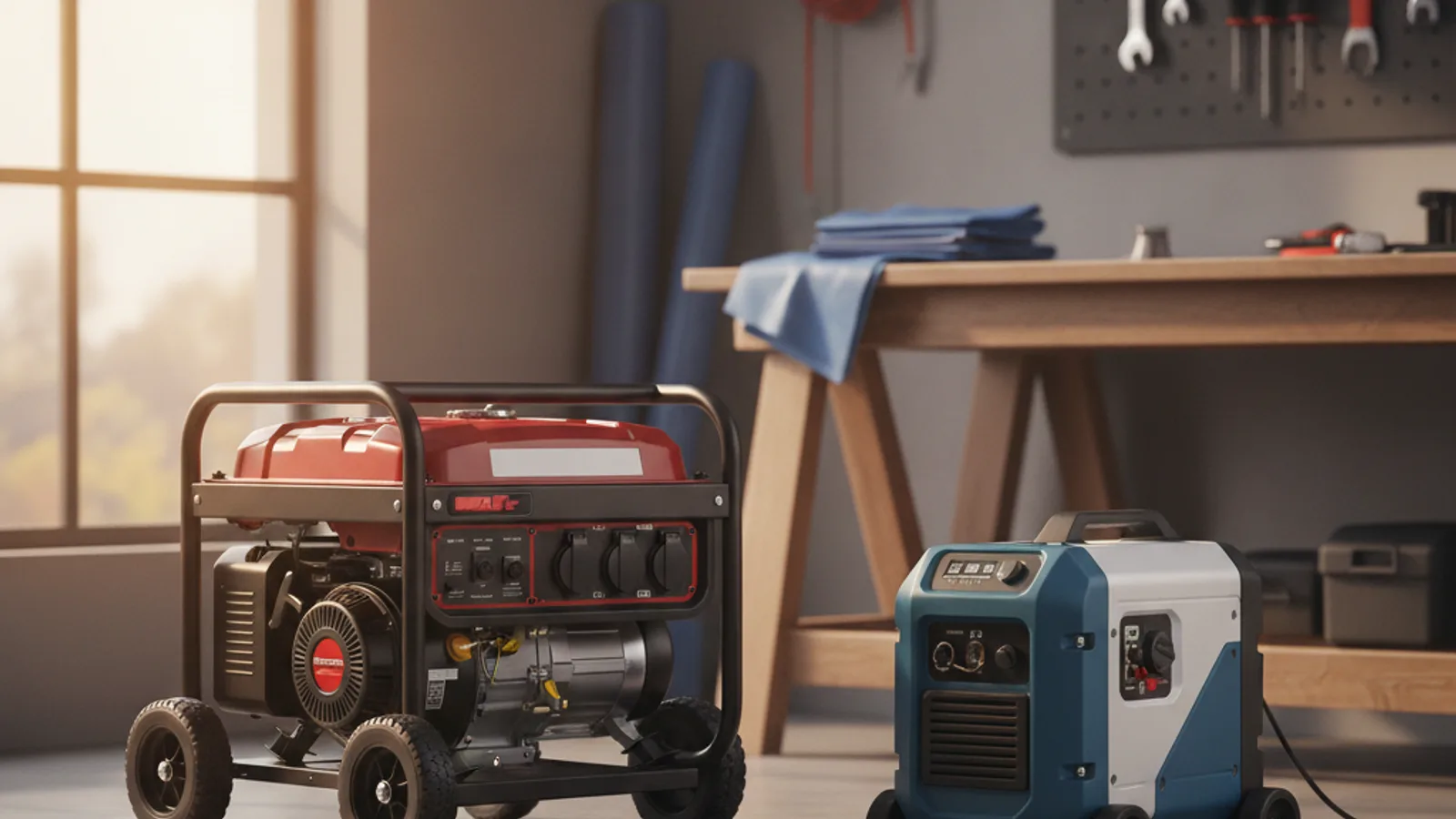
Generators split into three real categories: inverter generators (quiet, fuel-efficient, expensive per watt, for RVs and sensitive electronics), conventional portable generators (cheap per watt, loud, for jobsites and emergency backup), and whole-home standby generators (permanent install, automatic transfer switch, $3000-10000+).
The right generator depends on what you’re powering and how often. This guide covers all three, plus the new wave of solar/battery alternatives (Jackery, EcoFlow, Goal Zero) which compete with small inverter generators.
At a Glance
 Honda EU2200i 2200 Watt Inverter Generator (EU2200ITAN)
 Westinghouse 2200 Peak Watt Super Quiet & Lightweight...
 Westinghouse 12500 Watt Dual Fuel Home Backup Portable...
 DuroMax XP13000EH 13,000-Watt Dual Fuel Portable...
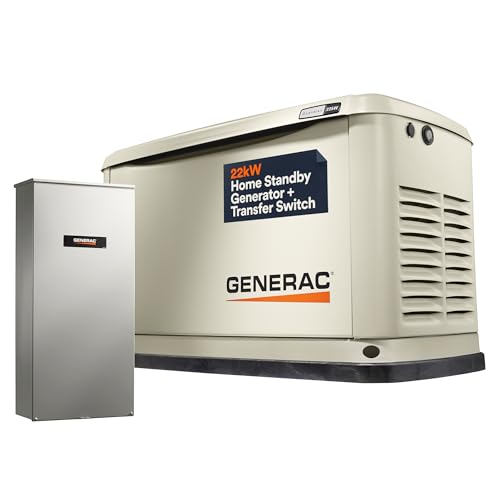 Generac Guardian 22kW Home Standby Generator with 200...
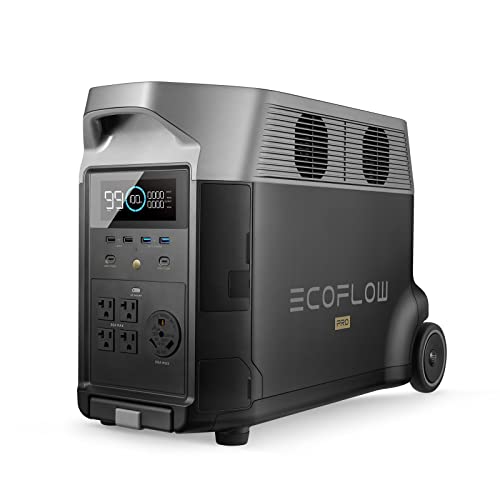 EF ECOFLOW Portable Power Station 3600Wh DELTA Pro,...
Product images and titles from Amazon. As an Amazon Associate we earn from qualifying purchases.
Quick Picks by Use Case
| Use case | Best Pick | Why | Price |
|---|---|---|---|
| Camping / RV / quiet | Honda EU2200i | Quietest 2200W inverter, 30+ year reputation | $1100-1300 |
| Inverter (budget) | Westinghouse iGen2200 | 2200W inverter, half the price of Honda | $500-650 |
| Home backup (portable) | Westinghouse WGen9500DF | 9500W dual fuel, runs gas or propane | $1100-1400 |
| Jobsite | DuroMax XP13000EH | 13000W dual fuel, brutal duty cycle | $1300-1700 |
| Whole-home standby | Generac Guardian 22kW | Auto-start during outage, runs everything | $5500-7500 |
| Solar / battery alt | EcoFlow Delta Pro | 3600W battery, expandable to 25kWh, silent | $3000-4000 |
| Ultra-portable inverter | Honda EU1000i | 1000W, 28 lbs, runs 8 hrs on 0.6 gal | $800-950 |
Inverter Generators (Quiet, RV/Camping)
Inverter generators produce "clean" sine-wave power suitable for laptops, phones, modern TVs, CPAP machines, anything with a microprocessor. They’re also dramatically quieter than conventional generators (50-58 dB vs 70-80 dB).
Honda EU2200i
The reference inverter generator. 2200W peak / 1800W rated, 48 dB at quarter load (quieter than a normal conversation). Honda’s GX engine has a 30+ year reputation for running 2000+ hours without trouble.
Two EU2200i units can be paralleled (linked together) to deliver 4400W, covers most RV air conditioners. The CO-Minder shuts the generator down if it detects unsafe carbon monoxide levels.
Pros
- Quietest 2200W in the market
- 30-year reputation, parts everywhere
- Pure sine wave for sensitive electronics
- Parallel-capable for 4400W
Cons
- 2x the price of competitors
- Gasoline only (no propane option)
- Premium brand markup
Westinghouse iGen2200
Half the price of the Honda EU2200i with 90% of the performance. 2200W peak, 52 dB quiet operation. Engine isn’t as bulletproof as Honda’s GX but it’ll run for years with proper maintenance.
Best inverter generator under $700 for budget-conscious campers and RV owners.
Check current price →Champion 4500W Dual Fuel Inverter
4500W peak / 3500W rated, dual fuel (gas or propane), and quiet enough at 61 dB. Powers a 30-amp RV including air conditioner without parallel rigging.
Check current price →Portable Generators (Home Backup, Jobsite)
Conventional portable generators are louder and produce dirtier power, but they deliver more watts per dollar. For sump pumps, refrigerators, power tools, and lights during an outage, they’re fine.
Westinghouse WGen9500DF
9500W peak / 7500W rated, dual fuel. Runs on gasoline OR propane, propane is cleaner-burning and stores indefinitely (gasoline goes bad in 6 months). At 7500W rated, it powers most home essentials simultaneously: fridge, sump pump, well pump, central AC start (briefly), lights, and small appliances.
Includes a remote start key fob and electric start button. Wheels included for 220 lb of generator.
Check current price →DuroMax XP13000EH
13000W peak / 10500W rated. Brutal duty cycle, this is what jobsite contractors run when they need to power saws, compressors, and welders simultaneously. 18-hp engine, dual fuel.
Total power transfer: enough to run a typical 4-bedroom home including central AC. Caveat: louder (74 dB) than a Generac standby, gas-thirsty.
Check current price →Champion 3500W
3500W peak / 4000W max with dual fuel. Best entry-tier home backup, powers fridge, sump pump, lights, phone charging, and a portable AC. Around $400, half the price of dual-fuel competitors.
Check current price →Whole-Home Standby Generators
Standby generators are permanent installations, they sit outside your house, connect to natural gas or propane, and auto-start within seconds of an outage. The premium price ($3500-10000+ installed) buys "you don’t notice the power went out."
Generac Guardian 22kW
22kW = 22,000 watts, enough to run virtually any home including central AC, electric oven, well pump, hot tub, and EV charger simultaneously. Auto-transfers within 10 seconds of outage. Connects to existing natural gas line (or propane tank).
Generac dominates this market for a reason: 5-year warranty, nationwide installer network, smart Wi-Fi monitoring. Total installed cost $5500-9500 depending on gas line distance.
Check current price →Generac Guardian 14kW
14kW for smaller homes (under 2500 sq ft) where you don’t need central AC + electric oven simultaneously. About $1500-2000 less installed than the 22kW.
Check current price →Battery / Solar Power Stations (The Generator Alternative)
Battery power stations have become a real alternative to small generators. They’re silent, indoor-safe, can be solar-charged, and have come down dramatically in price. For short outages and camping, they often beat generators.
EcoFlow Delta Pro
3600W AC output, 3.6 kWh battery, expandable to 25 kWh with extra batteries. Charges from solar, wall, or car. 0% noise, 0% emissions, indoor-safe. Powers a fridge for 30+ hours, or a CPAP for several days.
The math vs a generator: a Delta Pro costs $3500. A Honda EU2200i + 30 gallons of stored gasoline runs you ~$1300 + $150. The Delta Pro pays for itself if you use it for camping AND emergency backup AND want silence.
Check current price →Jackery Explorer 1000 Plus
1264 Wh battery, 2000W AC output. Best mid-size battery for camping or short outages. About $800; weighs 32 lbs.
Check current price →EcoFlow 400W Portable Solar Panel
Pairs with EcoFlow Delta Pro or Jackery to recharge from sun. Folds for transport. Real-world output 250-350W in good conditions.
Check current price →Sizing: How Many Watts Do You Need?
The biggest mistake buyers make is undersizing. Add up the running watts of everything you’ll run simultaneously, then add 30% for startup surge:
| Appliance | Running Watts | Startup Surge |
|---|---|---|
| Refrigerator (full size) | 700 | 2200 |
| Sump pump (1/3 hp) | 800 | 1300 |
| Well pump (1/2 hp) | 1000 | 2000 |
| Central AC (3 ton) | 3500 | 5000 |
| Window AC (10000 BTU) | 1200 | 3600 |
| Electric water heater | 4000 | 4000 |
| Microwave | 1000 | 1000 |
| Furnace blower | 800 | 2200 |
| LED lights (whole house) | 200 | 200 |
| Phone/laptop chargers (multiple) | 200 | 200 |
Common scenarios:
- Just keep the fridge + sump pump running: 3500W generator (Champion 3500)
- Fridge + sump + well + furnace blower + lights: 5500W generator
- Above + window AC: 7500-9500W generator (Westinghouse WGen9500DF)
- Whole house including central AC: 13000W portable OR 22kW standby
For more precise sizing, use the wattage of your actual appliances (printed on the label) plus surge factors above.
Accessories You’ll Need
- Manual transfer switch (10-circuit), required for safe whole-home generator use. Backfeeding through an outlet is dangerous and illegal in most states.
- 10-gauge generator cord (50 ft), thicker cord = less voltage drop over distance.
- All-weather generator cover, protects between uses; do NOT use while running.
- Fuel stabilizer (STA-BIL) (I own this one; it has earned its spot.), extends gasoline storage from 6 months to 2 years.
- 30-lb propane tank, for dual-fuel generators. Propane stores indefinitely.
- CO detector (battery-powered), CRITICAL. Generators kill people every winter from carbon monoxide. Always operate at least 20 ft from any window or door.
Frequently Asked Questions
Inverter or conventional generator?
Inverter if you’re powering electronics (laptops, TVs, CPAPs, phones), or you need it quiet (camping, RV, late-night outages). Conventional if you’re running power tools, sump pumps, fridges, or want max watts per dollar. Many homes have one of each.
Gas, propane, or dual fuel?
Dual fuel is the right answer if available. Gas is cheaper per BTU but goes bad in storage. Propane stores indefinitely. Dual-fuel generators let you use whichever is convenient. Slightly more expensive upfront, much more flexible.
How long can I run a generator?
Most portable generators have a 6-12 hour fuel tank, but the engine can run continuously for 100+ hours if you refuel without stopping. Manufacturers recommend an oil change every 25-50 hours of run time.
Can I run a generator in my garage?
NO. Carbon monoxide accumulates fast and is invisible/odorless. Generators must run outdoors, at least 20 feet from any window, door, or vent. CO from a generator in an attached garage has killed entire families.
Is a Generac Guardian worth $7000+ vs a portable?
If you have frequent outages (more than 2-3 per year) and 60+ minute durations, yes, the convenience of automatic-start is worth it. If outages are rare or short, a portable with a transfer switch is much cheaper. Standbys also boost home value 4-6% in markets where outages are common.
What size generator for an RV?
Class A motorhome: 4500W+ inverter (Champion 4500 or paralleled Honda EU2200i units). Class C: 3000-4000W. Travel trailer with 30-amp service: 3000W. Pop-up or van without AC: 1000-2000W (Honda EU1000i is enough).