Best Shop Vacuums 2026: Wet/Dry Vacs for Garage, Workshop & Jobsite
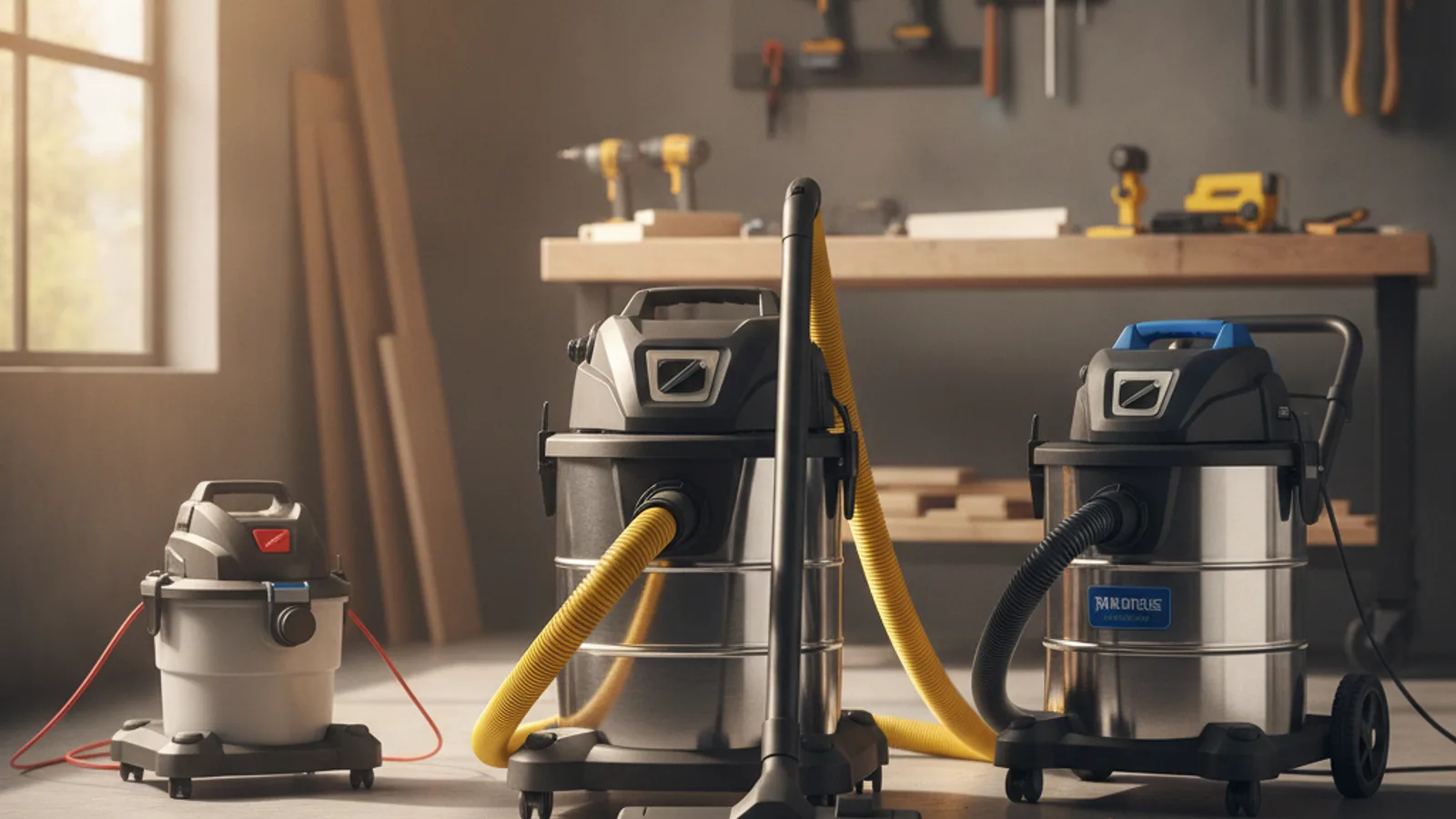
A shop vacuum is the one tool in every serious DIYer's garage that does ten different jobs: cleaning drywall debris, picking up spilled liquids, collecting dust from power tools, clearing sawdust from a floor, and pulling double duty as a leaf blower in reverse. The difference between a good shop vac and a frustrating one comes down to three things: true airflow (not peak HP marketing), the right tank size for your jobs, and whether the filter actually captures the dust you're making.
Peak horsepower ratings on shop vac boxes are marketing numbers measured at stall, they tell you nothing about real suction. What matters is CFM (airflow) and sealed suction (water lift), tank capacity matched to your workload, and for fine dust like drywall and concrete, whether the filter meets HEPA or at least 1-micron filtration. This guide cuts through the noise with a concrete pick for every real shop vac use case.
At a Glance
 14 Gal. 6.0-Peak HP NXT Wet Dry Vac
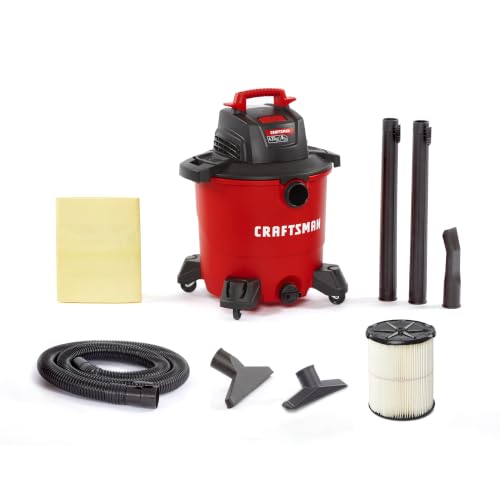 CRAFTSMAN CMXEVBE17590 9 Gallon 4.25 Peak HP Wet Dry...
 RIDGID 36683 6 Gallon Wet/Dry Vacuum
 . Milwaukee M18 Fuel 6 Gallon Wet/Dry Vacuum - No...
 Festool 574786 CT MINI HEPA Dust Extractor
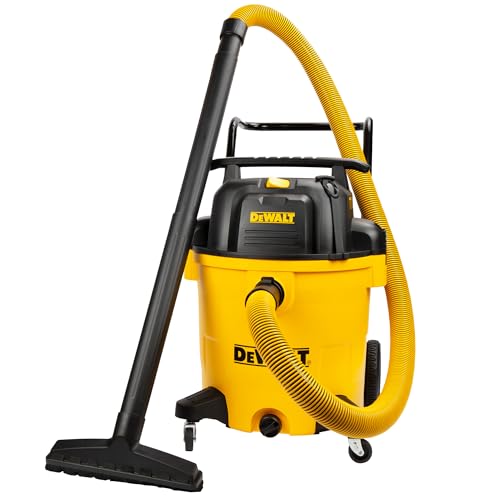 DEWALT 16 Gal 6.5 HP 116CFM Wet Dry Vacuum with Blower...
Product images and titles from Amazon. As an Amazon Associate we earn from qualifying purchases.
Quick Picks by Use Case
| Use case | Best Pick | Tank | Price |
|---|---|---|---|
| Best overall | RIDGID WD1456 NXT 14-Gal. | 14 gal | $100–130 |
| Best budget | CRAFTSMAN 9-Gal. 4.25 HP | 9 gal | $65–80 |
| Best compact | RIDGID WD0671 6-Gal. 3.5 HP | 6 gal | $50–70 |
| Best cordless | Milwaukee M18 FUEL 0910-20 | 6 gal | $150–180 (bare) |
| Best HEPA / fine dust | Festool CT MINI E Dust Extractor | 3.4 gal | $350–400 |
| Best pro / contractor | DeWalt DXV16PA 16-Gal. | 16 gal | $180–220 |
| Best large capacity | RIDGID HD1900 19-Gal. 6.5 HP | 19 gal | $130–160 |
| Best mid-size value | Vacmaster Professional 12-Gal. | 12 gal | $90–110 |
How to Pick the Right Tank Size
Tank capacity is the single most important spec after suction power. An undersized tank means constant emptying; an oversized drum on a compact machine is unwieldy.
| Tank Size | Best For | Empty Frequency (heavy use) |
|---|---|---|
| 2–5 gallons | Car detailing, small cleanups, hobby workspace | Every session |
| 6–9 gallons | Home workshop, light debris, occasional use | Every 1–2 sessions |
| 10–14 gallons | Serious DIY, power tool hookup, garage cleanup | Every 2–4 hours of tool use |
| 16–20 gallons | Renovation projects, contractor jobsite, heavy debris | Daily or end of shift |
Peak HP vs. Real Suction: What Actually Matters
Every shop vac box leads with peak horsepower. Ignore it, it's a stall measurement, not operating performance. The two specs that matter are CFM (cubic feet per minute: how much air the vac moves, which determines how quickly it picks up debris) and water lift (sealed suction in inches, which determines its ability to pick up heavy, dense, or wet material). A vac with 150 CFM and 80" of water lift will outperform a “6.5 HP” unit with 100 CFM and 55" lift every time. Manufacturers don't always publish both specs, but they're the honest measures of performance.
The 8 Best Shop Vacuums of 2026
RIDGID WD1456 NXT 14-Gallon 6.0 HP Wet/Dry Vac
RIDGID's NXT line represents a significant upgrade over their older contractor-grade drums: the WD1456 delivers 14-gallon capacity and 6.0 peak HP through an improved motor that runs quieter and cooler than its predecessor. The NXT cartridge filter is the real improvement, it captures particles down to 1 micron in dry mode (far better than the 5-micron standard most competitors sell), and it snaps in without tools. The 1-7/8" and 2-1/2" dual-port hose connection gives you compatibility with nearly every power tool dust port on the market. At 14 gallons, it holds enough to get through a full drywall day or a deck sanding session without stopping to empty. Comes with a locking hose, utility nozzle, crevice tool, wet nozzle, and the NXT cartridge filter, everything you need out of the box.
Pros
- 1-micron NXT filter included standard (not an upgrade)
- Dual-port hose connection fits most tool hookups
- 14-gal tank handles full renovation sessions
- Quieter than previous RIDGID motor generations
- Lifetime warranty on RIDGID motors
Cons
- Bulkier than compact units, harder to store vertically
- No auto-start (requires manual power toggle for tool hookup)
- HEPA requires separate filter upgrade
CRAFTSMAN 9-Gallon 4.25 HP Wet/Dry Vac
If you need a shop vac for occasional garage cleanups, car detailing, and picking up small workshop debris, the CRAFTSMAN 9-gallon is the best-built option under $80. At 4.25 peak HP and 9 gallons, it handles everything a homeowner typically throws at it: spilled liquids, sawdust, drywall joint compound, leaf litter, and workshop floors. The blower port lets you reverse the airflow for cleaning leaves out of corners. The standard cartridge filter is adequate for general debris, not HEPA, but functional for non-silica applications. CRAFTSMAN's build quality at this price tier is a step above the cheapest Shop-Vac boxes, with more durable drum connections and a reliable motor that holds up to seasonal use.
Pros
- Excellent value under $80 for casual homeowner use
- Includes blower port (doubles as a leaf blower)
- 9-gal tank rarely needs emptying for light use
- Compact enough for closet storage
Cons
- Standard 5-micron filter, not for drywall or silica dust
- Shorter hose than larger units
- Not designed for extended daily contractor use
RIDGID WD0671 6-Gallon 3.5 HP Wet/Dry Vac
At 6 gallons and 3.5 peak HP, the RIDGID WD0671 is the compact shop vac that actually delivers contractor-grade construction without the bulk. The smaller drum means it stores under a workbench, fits in a truck bed tool organizer, or moves between rooms without effort. Despite its size, RIDGID's motor delivers enough suction for power tool hookup, workshop debris, and spills. The same 1-7/8" and 2-1/2" dual ports as the larger NXT models give you full tool compatibility. For apartment workshops, compact garages, second-floor finishing work, or anyone who wants a dedicated car-cleaning vac, this is the size that gets used instead of sitting in the corner.
Pros
- Compact size, stores easily, moves without effort
- RIDGID reliability at a light-duty scale
- Same tool-port compatibility as larger RIDGID units
- Good suction for its size class
Cons
- 6-gal fills up quickly on heavy debris jobs
- Lower CFM than 14-gal units for large-area cleanup
- Not ideal as a primary workshop vac for full renovations
Milwaukee M18 FUEL 6-Gallon Wet/Dry Vac (0910-20)
For Milwaukee M18 battery users, the 0910-20 is a game-changer for jobsite cleanup: no cord to manage, no outlet to hunt for, and the same 6-gallon capacity as a mid-size plug-in unit. The Auto-Mode detects when an M18 tool is plugged in and starts automatically, the closest you get to professional dust extractor auto-start behavior at this price. At 80 CFM, it's not a replacement for a full corded unit on heavy debris, but for daily jobsite cleanup, trim work, cabinet installation, and finish carpentry where you're already carrying M18 tools, eliminating the power cord is a genuine workflow improvement. Runtime on a 5.0 Ah battery is approximately 20–30 minutes of continuous use.
Pros
- No cord, runs anywhere with M18 batteries
- Auto-Mode starts when M18 tool runs
- Compatible with entire Milwaukee M18 ecosystem
- 6-gal capacity handles a full shift of light cleanup
Cons
- Battery not included, add $60–130 if starting fresh
- Lower CFM than corded units for heavy debris
- Only worthwhile if already invested in Milwaukee M18
Festool CT MINI E Dust Extractor (HEPA)
The Festool CT MINI E is not a shop vac, it's a dust extractor built to OSHA silica standards, and for drywall sanding, concrete grinding, and any work where you're generating respirable crystalline silica, it's the correct tool. The HEPA filter captures 99.97% of particles ≥0.3 microns, including silica, lead paint dust, and mold spores that standard filters pass through. The Auto-Clean function pulses the filter to knock settled dust back into the collection bag, maintaining consistent suction without stopping to tap the filter. Festool's Systainer compatibility means it stacks cleanly with other Festool gear. At ∼59 dB, it runs quieter than most shop vacs under load. At 3.4 gallons, it fills faster than larger units, trade-off for the compact footprint. If you're doing drywall, tile cutting, or concrete work and care about lung health, this is the machine.
Pros
- True HEPA filtration, OSHA silica compliant
- Auto-Clean filter pulse maintains suction without stopping
- Auto-start with any compatible power tool
- Very quiet (∼59 dB), usable in occupied spaces
- Festool Systainer ecosystem integration
Cons
- $350–400, 3× the price of a RIDGID with HEPA upgrade
- 3.4-gal tank fills quickly on heavy-dust jobs
- Bags are proprietary and add ongoing cost
DeWalt DXV16PA 16-Gallon 6.5 HP Wet/Dry Vac
The DeWalt DXV16PA is built for contractors who run the same vac on five different jobsites a week. The 16-gallon stainless steel drum resists dents and corrosion that plastic drums accumulate after months of daily abuse. At 6.5 peak HP and 150 CFM, it has the airflow to stay ahead of a busy renovation crew. DeWalt includes a four-stage filtration system (cloth filter bag + foam sleeve + cartridge filter + fine-dust bag option), plus an extra-long 10-foot hose that reaches farther on open floors without dragging the unit. The accessory collection, crevice tool, wet nozzle, floor nozzle, car nozzle, is more comprehensive than what RIDGID includes. For anyone running a small construction business or doing full-house renovations, the DXV16PA holds up to daily professional use.
Pros
- Stainless steel drum survives jobsite abuse better than plastic
- 10-foot hose, longer reach than most competitors
- 4-stage filtration included out of the box
- 6.5 HP with 150 CFM handles high-volume debris
- Comprehensive accessory kit
Cons
- Heavier than plastic drum units
- Larger footprint, not ideal for compact workshops
- No auto-start for tool hookup
RIDGID HD1900 19-Gallon 6.5 HP Wet/Dry Vac
When you're doing large renovation work, gutting a kitchen, pulling up flooring, clearing a flooded basement, stopping to empty every 20 minutes kills productivity. The RIDGID HD1900 runs 19 gallons, enough to handle a full-day demolition session without emptying in the middle of a messy task. The 6.5 peak HP motor delivers strong suction across the larger drum volume. Like all RIDGID shop vacs, it's compatible with the full RIDGID accessory ecosystem, replacement filters, hose extensions, floor nozzles, and cyclone separators all clip on without adapters. For contractors doing gut renovations and homeowners tackling full-room projects, the HD1900 is the “fill it and forget it” option.
Pros
- 19-gal capacity, rarely needs emptying mid-project
- RIDGID ecosystem compatibility (hoses, filters, accessories)
- Strong 6.5 HP across the full drum
- Handles heavy wet pickup (flooding, wet concrete)
Cons
- Bulky, not a daily-driver for small workshops
- Full drum at 19 gal is heavy to carry to disposal
- Overkill for light homeowner use
Vacmaster Professional 12-Gallon 5.0 HP Wet/Dry Vac
Vacmaster doesn't carry the brand recognition of RIDGID or DeWalt, but the Professional Beast series consistently performs above its price point. The 12-gallon, 5.0 HP unit hits the sweet spot for serious DIYers who don't want to pay for a contractor-grade drum: more capacity than a 9-gallon without the footprint of a 16-gallon. The dual-stage filtration (cloth bag inside the drum plus cartridge filter) captures finer debris than single-filter budget units. At $90–110, it's roughly half the cost of comparable-capacity RIDGID and DeWalt options while delivering similar real-world suction. For a home workshop that runs a table saw, router, and orbital sander but isn't on a renovation jobsite daily, the Vacmaster Professional hits a practical value target.
Pros
- Best price-per-gallon ratio in its class
- Dual-stage filtration captures finer dust than single-filter budget units
- 12-gal avoids constant emptying for workshop use
- Solid build quality for the price
Cons
- Less brand support for accessories than RIDGID
- Not OSHA-rated for silica or drywall fine dust
- Slightly louder than RIDGID equivalents
Essential Shop Vac Accessories
- Replacement cartridge filters, Buy brand-specific filters, not generic. RIDGID VF4000 (standard) and VF6000 (HEPA-rated) are the most common. Running a clogged filter overworks the motor, drops suction 30–50%, and lets fine dust blow out the exhaust. Keep a spare on hand so a dirty filter doesn't stop a project.
- Cyclone separator (Dust Deputy), The single best shop vac upgrade: installs between your hose and drum, centrifuges 99% of debris into a bucket before it touches the filter. Result: filter lasts 10× longer, suction stays consistent all day, no more mid-project filter tapping. Works with any drum shop vac.
- Hose extension kit, Standard hoses are 6–8 feet. A 10–20 foot extension kit lets you clean a full floor or reach the top of a wall without moving the unit. Get a kit with multiple couplers for flexible reach.
- Power tool dust port adapters, A universal adapter set bridges the gap between your shop vac's 1-7/8" or 2-1/2" hose and the dust ports on your router, miter saw, belt sander, or orbital sander. Without the right adapter, you're losing most of the dust collection benefit.
- Wet/dry collection bags (I own this one; it has earned its spot.), For fine dust like sanded drywall compound and fine sawdust, running a collection bag inside the drum captures debris before it reaches the filter. Makes emptying cleaner and doubles filter life. RIDGID VF3502 fits most 6–14 gal RIDGID drums.
- HEPA filter upgrade, If you have a standard shop vac and need to do one drywall or concrete job, a HEPA filter upgrade (RIDGID VF6000, for example) lets you use your existing unit for fine-dust work without buying a dedicated extractor. Pair with a collection bag for best results.
5 Shop Vac Mistakes to Avoid
- Using a standard filter for drywall sanding or concrete grinding. Standard 5-micron cartridge filters let fine silica-containing particles pass straight through the exhaust. For any material that generates respirable silica, drywall joint compound, concrete, tile cutting, mortar, use a HEPA filter or dedicated HEPA dust extractor. Your lungs don't repair silicosis.
- Vacuuming fine dry dust without a collection bag. Cartridge filters cake with fine drywall dust and lose 50%+ of suction within minutes. Running a collection bag inside the drum pre-separates most material before it reaches the filter. This single habit doubles filter life and keeps suction consistent through a full workday.
- Not washing foam sleeve filters before wet pickup. If you use the shop vac for dry debris first and then switch to wet pickup, remove the cartridge filter before sucking up liquids, a wet cartridge filter is ruined. The foam sleeve filter (the spongy ring over the cartridge) handles wet pickup; the cartridge handles dry. Swapping takes 30 seconds.
- Overfilling the drum. Debris or liquid touching the filter causes permanent damage, the foam gasket won't seal, the filter gets saturated, and the next dry session blows wet dust everywhere. Most shop vacs have a float valve that cuts suction at max fill level, but if yours doesn't, empty before the drum is 80% full on wet pickup.
- Skipping the cyclone separator on a filter-intensive workflow. If you sand, route, or cut a lot and burn through shop vac filters quickly, a $30–60 cyclone separator is the highest-ROI shop vac accessory you can buy. Pre-separating 99% of debris extends filter life from weeks to months and eliminates the productivity cost of constant filter maintenance.
Frequently Asked Questions
What size shop vac do I need?
2–5 gallons for car detailing and small cleanups; 6–10 gallons for home workshop and occasional tool hookup; 12–16 gallons for serious DIY and workshop use; 16–20 gallons for contractor renovation work. When in doubt, go one size larger, an undersized tank is the most common complaint in shop vac reviews.
What's the difference between peak HP and actual suction?
Peak HP is measured at stall, not operating performance. Look for CFM (airflow) and water lift (sealed suction) instead. Higher CFM moves debris faster; higher water lift picks up heavy or dense material. A 5.0 HP unit with strong CFM will outperform a 6.5 HP unit with poor impeller design.
Do I need HEPA for drywall dust?
Yes, drywall joint compound and other gypsum products contain respirable crystalline silica. Standard 5-micron filters let silica particles pass through the exhaust. Use a HEPA filter (like RIDGID VF6000) or a dedicated HEPA dust extractor (Festool CT MINI E) for any drywall sanding or concrete work.
Can a shop vac work with power tools?
Yes, use tool port adapters to connect your shop vac's hose to the dust ports on routers, miter saws, belt sanders, and orbital sanders. For auto-start (vac turns on when the tool does), look for units with auto-trigger functionality like the Milwaukee M18 FUEL or Festool CT series. A cyclone separator dramatically improves performance by keeping debris out of the filter.
How often should I replace the filter?
For cartridge filters: clean every 2–4 sessions by tapping loose debris outdoors. Replace every 6–12 months with regular use when cleaning no longer restores suction. Foam sleeve filters: rinse and dry completely after every wet-pickup session. HEPA filters: replace per manufacturer schedule, typically annually with moderate use. Running a cyclone separator before the drum extends filter life dramatically.