Best Impact Drivers 2026: Tested by Use Case
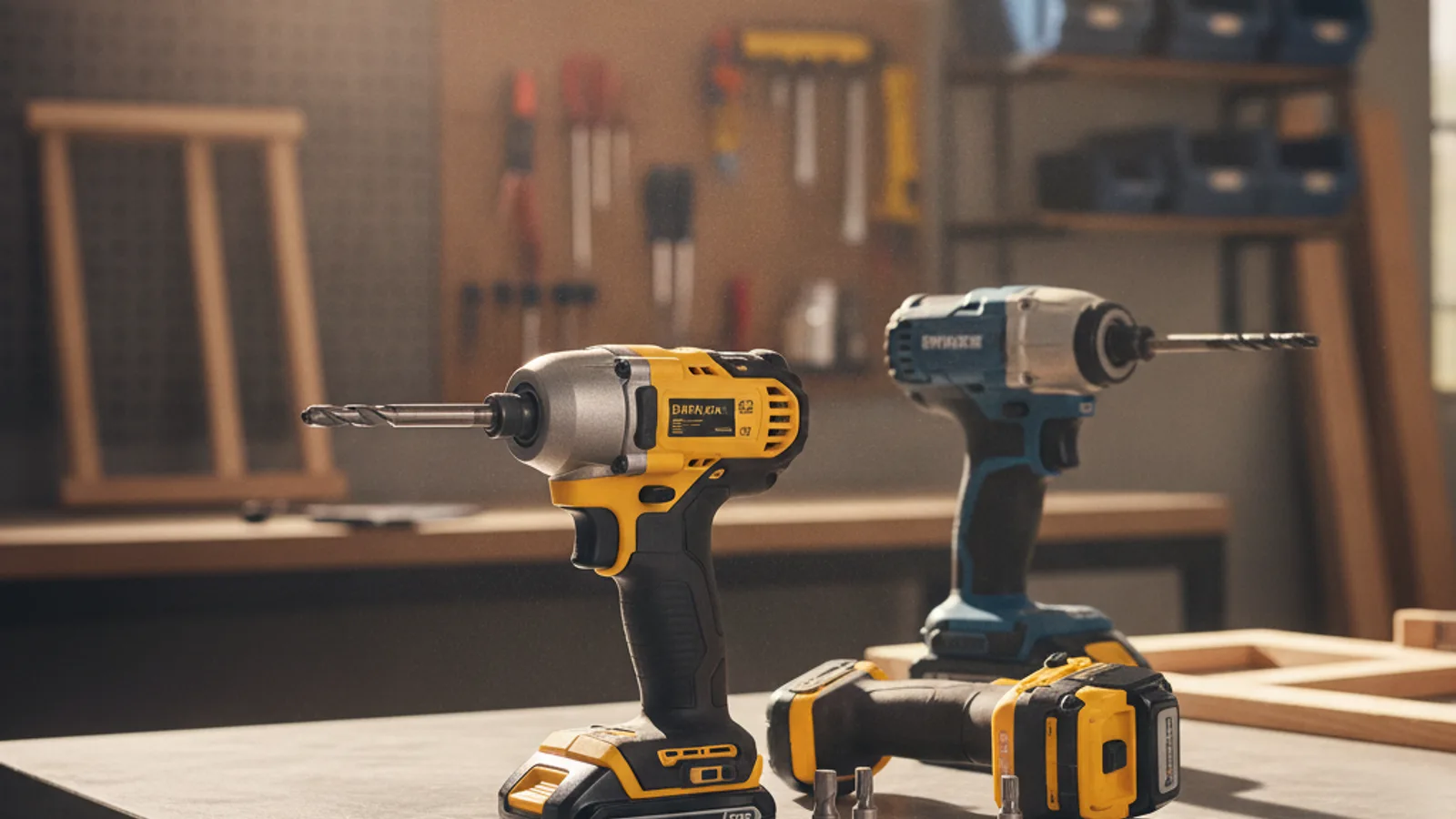
An impact driver delivers rotational impacts as it spins, up to 3,500 beats per minute, which is why it drives lag bolts effortlessly where a standard drill would strip the bit or stall. They fall into clear tiers: homeowner-grade (Ryobi, Craftsman, affordable, ONE+ battery ecosystem, light to medium duty), prosumer (DeWalt, Makita, brushless motors, solid duty cycles, 3-year warranties), and professional (Milwaukee M18 FUEL, highest torque class, largest tool ecosystem, what contractors run daily for years).
The right impact driver depends on what you're fastening, how often, and whether you're already invested in a battery platform. This guide covers every real use case with a concrete pick for each.
At a Glance
 Milwaukee 2853-20 M18 FUEL 18-Volt Lithium-Ion...
 RYOBI ONE+ 18V Cordless 1/4 in. Impact Driver - 1,800...
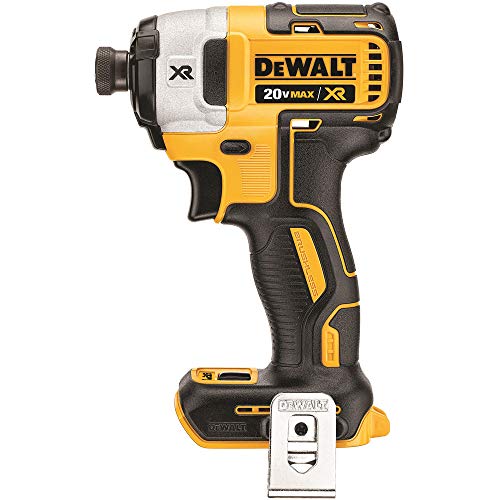 DEWALT 20V MAX XR Impact Driver, Brushless, 3-Speed,...
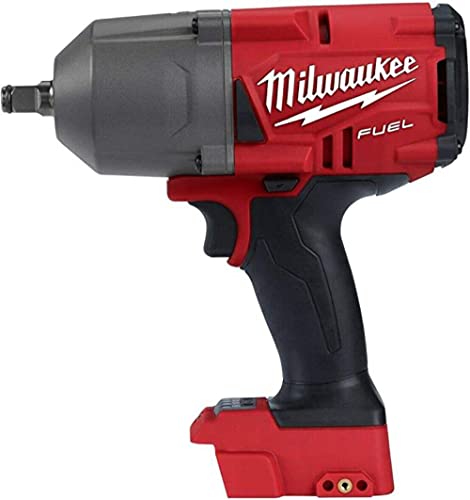 Milwaukee 2767-20 M18 Fuel High Torque 1/2" Impact...
 Makita XDT16Z 18V LXT Lithium-Ion Brushless Cordless...
 Milwaukee ELEC TOOL 2760-20 M18 Fuel Hex Hydraulic...
Product images and titles from Amazon. As an Amazon Associate we earn from qualifying purchases.
Quick Picks by Use Case
| Use case | Best Pick | Why | Price |
|---|---|---|---|
| Best overall | Milwaukee M18 FUEL 2853-20 | 2,000 in-lbs, auto-stop, 4-mode DRIVE CONTROL | $140–170 (bare) |
| Best budget kit | Ryobi PCL235B1 ONE+ 18V Kit | Brushless, battery + charger included, 300+ ONE+ tools | $80–110 |
| Best DeWalt pick | DeWalt DCF887B 20V MAX | 1,825 in-lbs, 3-speed, precision drive mode, compact body | $100–130 (bare) |
| High-torque (lag bolts) | Milwaukee 2767-20 M18 FUEL | 1,000 ft-lbs loosening, structural screws and large lags | $250–310 (bare) |
| Compact / tight spaces | DeWalt DCF901B Xtreme 12V | 4.6 lbs lighter kit, 1,600 in-lbs, fits anywhere | $80–100 (bare) |
| Best Makita pick | Makita XDT16Z 18V LXT | 1,590 in-lbs, 4-speed, Auto-Stop mode, 3.3 lbs | $120–150 (bare) |
| Hydraulic (quietest) | Milwaukee 2760-20 M18 FUEL SURGE | 50% quieter via hydraulic mechanism, same power as 2853 | $170–200 (bare) |
| Drill + impact combo kit | DeWalt DCK240C2 Combo Kit (I own this one; it has earned its spot.) | Drill + impact driver + 2 batteries, cheaper than buying separately | $150–200 |
Best Overall Impact Driver
Milwaukee M18 FUEL 2853-20
2,000 in-lbs max torque · 0–3,200 RPM · 4 drive modes · 3.4 lbs
The 2853 is what professional framers, deck builders, and finish carpenters reach for when they need a tool that won't slow them down. Milwaukee's FUEL designation means a proprietary brushless motor, Redlink Plus electronics that prevent overload, and the PowerState controller that delivers full torque from the first RPM. The standout feature is DRIVE CONTROL, four modes including Precision Drive (reduced speed for finish work where over-driving kills the surface) and Rapid Stop (the chuck stops instantly when you release the trigger, preventing fastener walk on tight work).
It runs on the M18 battery ecosystem, over 250 compatible tools, which makes the battery investment compound in value as you add tools. The 2.0Ah compact battery gives 2.5 hours of trim carpentry; a 5.0Ah high-capacity battery extends that to an all-day professional kit.
Pros
- Highest torque in standard 18V class (2,000 in-lbs)
- 4-mode DRIVE CONTROL with precision + rapid stop
- Largest professional tool ecosystem (M18)
- REDLINK Plus prevents overload damage
- 5-year tool warranty
Cons
- Bare tool only, batteries sold separately add $80–150
- Heavier than 12V compact options (3.4 lbs)
- Premium price vs. Ryobi/Craftsman alternatives
Best Budget Impact Driver Kit
Ryobi PCL235B1 ONE+ 18V Brushless
1,700 in-lbs max torque · 0–3,200 RPM · Brushless · Kit includes battery + charger
Ryobi's ONE+ brushless impact driver delivers performance that rivals prosumer brands at roughly half the price, and comes with a battery and charger in the kit, which is the key value play. At 1,700 in-lbs, it handles 99% of homeowner tasks: driving 3-inch deck screws, assembling furniture, framing walls, hanging shelving. It won't outlast a Milwaukee on a job site running 8 hours a day, but for weekend projects and home maintenance, it's more than sufficient.
The real long-term value is the ONE+ ecosystem: over 300 Ryobi tools share the same 18V battery platform, from circular saws to leaf blowers to pressure washers. Every future ONE+ tool purchase costs less because you already own batteries. If you're starting a new battery ecosystem on a budget, ONE+ is the right choice.
Pros
- Kit includes battery + charger, complete out of box
- 300+ ONE+ tools share the same batteries
- Brushless motor at budget price
- 1,700 in-lbs handles all homeowner tasks
- Widely available at Home Depot
Cons
- Duty cycle lower than DeWalt/Milwaukee for sustained heavy use
- Included 2.0Ah battery gives ~30–40 min runtime on heavy tasks
- Plastic feel vs. pro-grade tools
Best DeWalt Impact Driver
DeWalt DCF887B 20V MAX XR Brushless
1,825 in-lbs max torque · 0–3,250 RPM · 3-speed + precision mode · 2.8 lbs
The DCF887 is DeWalt's best-selling impact driver for good reason: it's lighter than the Milwaukee 2853 (2.8 vs 3.4 lbs), has a Precision Drive mode that slows the driver to 380 RPM for finish work, and fits in the same 20V MAX platform as DeWalt's drills, circular saws, and specialty tools. The three-speed design lets you dial speed and torque for the application, low for small screws where you'd otherwise strip the head, high for slamming in framing fasteners.
DeWalt's 3-year warranty (vs. Milwaukee's 5-year) is the main tradeoff. For homeowners and light-commercial work, it's a non-issue. For daily professional use over many years, Milwaukee's warranty and duty cycle become more meaningful. Either way, the DCF887 represents excellent value as a prosumer pick in the DeWalt 20V MAX ecosystem.
Pros
- Lightest full-torque 18V option (2.8 lbs)
- 3-speed + precision drive mode
- Best-in-class ergonomics and grip angle
- Huge 20V MAX tool ecosystem
- Widely available, competitive pricing
Cons
- 3-year warranty vs. Milwaukee's 5-year
- Slightly lower max torque than Milwaukee 2853
- Bare tool only, batteries extra
Best High-Torque Impact Driver (Lag Bolts & Structural Work)
Milwaukee 2767-20 M18 FUEL High-Torque Impact Wrench
1,000 ft-lbs loosening / 650 ft-lbs fastening · 1/2″ square drive · DRIVE CONTROL · 7.9 lbs
When you're running 1/2-inch lag bolts into ledger boards, tightening structural Simpson connectors, or doing deck and pergola builds where 5/16″–1/2″ lags are standard fasteners, a standard impact driver tops out before the job is done. The 2767 is a high-torque impact wrench, it uses a 1/2-inch square drive (hex socket adapter included) and delivers torque in a different league from standard 1/4″ hex drivers.
For most DIYers this is specialty equipment, if you're not regularly running lags or doing vehicle maintenance on the same tool, the standard 2853 or DCF887 is enough. But for structural deck builds, post-frame building, or anyone who also uses the tool for automotive work (lug nuts, suspension bolts), the 2767 justifies itself on the first structural project.
Pros
- 1,000 ft-lbs loosening torque, structural-grade
- DRIVE CONTROL: 4 modes including precision and auto-stop
- Handles vehicle lug nuts (with correct impact sockets)
- Same M18 battery platform
Cons
- Heavier and bulkier than standard impact drivers (7.9 lbs)
- Uses 1/2″ square drive, not 1/4″ hex, not for standard screw bits
- Premium price ($250–310 bare)
- Overkill for most homeowner tasks
Best Compact Impact Driver (Tight Spaces)
DeWalt DCF901B Xtreme 12V MAX
1,600 in-lbs max torque · 0–2,900 RPM · 12V · 2.4 lbs · 5.1″ length
The DCF901 is DeWalt's shortest impact driver, 5.1 inches end to end, which makes it the go-to for cabinet installation, kitchen and bathroom trim work, and any application where you're driving screws overhead or in recessed spaces where an 18V tool won't fit. At 2.4 lbs, you'll actually feel the difference on overhead work where arm fatigue is real.
The 12V platform uses smaller, lighter batteries, which is both the advantage (the tool weighs less) and the constraint (batteries don't cross-use with 20V MAX tools). If you already own 20V MAX DeWalt batteries, consider the DCF787B (compact 20V version) instead. But if you're frequently working in tight spaces and want the absolute smallest tool that still drives structural screws, the 12V DCF901 has no equal.
Pros
- Shortest body in class (5.1″), fits where 18V tools can't
- 2.4 lbs, noticeably lighter for overhead and tight-angle work
- 1,600 in-lbs handles most residential fastening
- 3-speed + precision mode
Cons
- 12V batteries don't cross-use with 20V MAX platform
- Lower max torque than 18V models, not for heavy structural work
- Smaller battery capacity = more frequent charging on big jobs
Best Makita Impact Driver
Makita XDT16Z 18V LXT Brushless
1,590 in-lbs max torque · 0–3,600 RPM · 4-speed · Auto-Stop mode · 3.3 lbs
Makita's LXT platform is the choice for finish carpenters and woodworkers who prioritize precision over raw torque. The XDT16 delivers the highest RPM of any standard 18V impact driver (3,600 RPM) and features Auto-Stop mode, the motor shuts off automatically when the screw is seated to prevent over-driving, an invaluable feature for trim work and cabinetry where you can't afford to blow through finish material.
Makita's 4-speed design also goes lower than Milwaukee and DeWalt, down to 900 RPM for maximum control on delicate applications. If you already own Makita LXT batteries (one of the world's most popular battery platforms), the XDT16Z is the right upgrade path. For new buyers weighing platforms, Milwaukee and DeWalt have larger tool ecosystems in the US market; Makita wins on precision features for finish work.
Pros
- Highest RPM in class (3,600) for fast driving
- Auto-Stop mode prevents over-driving, ideal for finish work
- 4-speed including 900 RPM low for maximum control
- Lightweight (3.3 lbs) for sustained use
- LXT platform: huge battery ecosystem worldwide
Cons
- Lower max torque (1,590 in-lbs) than Milwaukee/DeWalt comparable
- LXT batteries pricier than Ryobi ONE+ equivalents
- Smaller US tool selection than Milwaukee M18 ecosystem
Best Quiet Impact Driver (Hydraulic)
Milwaukee 2760-20 M18 FUEL SURGE
450 UWO · 1,800 in-lbs max torque · Hydraulic mechanism · 50% quieter · 3.4 lbs
Most impact drivers are loud, the metallic impact mechanism produces 90–100+ dB, which adds up on all-day jobs and becomes a real problem in occupied buildings or renovation work near clients. The SURGE replaces the traditional steel impact mechanism with a hydraulic oil pulse mechanism that operates at 77 dB, about the volume of a running vacuum cleaner rather than a jackhammer.
The tradeoff: the hydraulic mechanism is slightly slower to engage under heavy load than a standard impact. For finish carpentry, decking, and renovation work in occupied spaces, the noise reduction is worth it. For high-volume structural fastening where speed is the priority, the standard 2853 is faster. Both use M18 batteries interchangeably, so if you own both tools, you can match the tool to the job.
Pros
- 50% quieter than standard impact drivers (77 dB vs. 90+ dB)
- Same M18 battery platform as 2853
- Nearly eliminates vibration for all-day use comfort
- Ideal for renovation work in occupied buildings
Cons
- Slightly slower to engage than mechanical impact under heavy load
- Premium price ($170–200 bare vs $140–170 for 2853)
- Hydraulic fluid can degrade in extreme cold
Best Drill + Impact Combo Kit
DeWalt DCK240C2 2-Tool Combo Kit
Drill/Driver + Impact Driver · 2× 1.3Ah batteries · charger included · 20V MAX
Most DIYers eventually want both a drill (for hole-making) and an impact driver (for fastening). The DCK240C2 bundles the DCD771 drill and DCF885 impact driver together with two batteries and a charger, at a price significantly lower than buying each tool separately. The DCF885 impact driver delivers 1,430 in-lbs, which handles all standard residential fastening, and the DCD771 drill handles 95% of hole-drilling applications.
The included 1.3Ah batteries are on the smaller side, expect 1–2 hours of mixed use per charge. For weekend projects this is fine; for full-day site work, upgrade to 2.0Ah or 5.0Ah batteries from the 20V MAX platform. The combo kit is the right purchase for anyone setting up a first cordless tool kit or converting to DeWalt 20V MAX for the first time.
Pros
- Both tools + 2 batteries + charger in one kit
- Significantly cheaper than buying tools separately
- Both tools use 20V MAX platform batteries
- Best entry point into DeWalt ecosystem
Cons
- 1.3Ah batteries are small, upgrade needed for sustained work
- DCF885 has lower torque (1,430 in-lbs) than premium DCF887
- Neither tool is the top spec version of its type
Impact Driver vs. Drill: Which Do You Actually Need?
| Task | Best Tool | Why |
|---|---|---|
| Driving deck screws (3″) | Impact driver | Torque + impacts prevent cam-out in hardwood |
| Driving drywall screws | Impact driver or drill | Impact is faster; drill gives more control at low speed |
| Running lag bolts (1/4″–5/16″) | Impact driver | Impacts prevent stalling under load |
| Running large lags (3/8″–1/2″) | High-torque impact wrench | Standard impact driver maxes out on large-diameter lags |
| Drilling through wood | Drill/driver | Impact drivers lack a chuck; spade/Forstner bits need rotation not impact |
| Drilling through metal | Drill/driver | HSS bits shatter under impact; drill at low speed with cutting oil |
| Drilling into concrete | Hammer drill | Neither standard drill nor impact driver is correct for masonry |
| Assembling furniture | Impact driver | Faster, less cam-out on short screws; use low speed/precision mode |
| Cabinet installation | Drill or compact impact driver | Precision needed; compact 12V impact with precision mode works well |
If you can only buy one: an impact driver handles 80% of typical home tasks. If you drill more than you fasten (frequent renovation work, metalwork, masonry), start with a drill/driver. A combo kit solves the question entirely.
Understanding Impact Driver Torque Ratings
Impact driver torque is rated in inch-pounds (in-lbs) and represents maximum instantaneous torque, not sustained torque. A 2,000 in-lb rating means the driver can apply that torque in short bursts during the impact mechanism's engagement, not continuously. Here's how to read the numbers:
- 1,200–1,500 in-lbs: Light to medium duty. Standard screws, furniture assembly, light framing. Adequate for occasional homeowner use.
- 1,600–1,800 in-lbs: Medium to heavy duty. 3-inch deck screws, most framing, standard lag bolts (1/4″). The prosumer sweet spot.
- 1,900–2,200 in-lbs: Professional heavy duty. Long structural screws, heavy-gauge fasteners, sustained high-volume driving. The M18 FUEL 2853 range.
- 500+ ft-lbs (impact wrench): High-torque wrenches for large lags (3/8″+), hex bolts, and automotive applications. Different tool category.
Note: brushless motors maintain torque under load better than brushed equivalents. A 1,800 in-lb brushless driver outperforms a 2,000 in-lb brushed driver in real-world heavy use because the brushless motor doesn't lose torque as the battery depletes.
Impact Driver Accessories Worth Having
- Impact-rated screwdriver bit set (50-piece), standard bits shatter under impact loads. Impact-rated (IMPACT READY, torsion zone, etc.) bits flex instead of snapping. Essential, don't use standard bits in an impact driver.
- 1/4″ hex socket adapter set, lets your impact driver drive hex-head fasteners (lag screws, structural bolts) using standard sockets with a hex shank. Critical for lag bolt work.
- Magnetic bit holder with screw guide, holds screws magnetically on the bit tip so you can start them one-handed in tight spaces. Worth every dollar for overhead and one-hand fastening.
- Self-drilling screws (deck/structural), the right screw matters as much as the driver. Self-drilling tips eliminate pre-drilling for most framing and decking applications.
- Right-angle impact attachment, for driving screws where the tool body won't clear the material. Frequently needed in joist bays and wall stud cavities.
- Spare battery (5.0Ah high-capacity), the included batteries in most kits are 1.5–2.0Ah. A 5.0Ah battery doubles runtime on heavy fastening jobs and is one of the best tool investments after the impact driver itself.
- Countersink drill bit set, for flush or plugged screw finishes in finish woodwork. Pre-drill + countersink before driving for clean, professional results.
Frequently Asked Questions
What is an impact driver used for?
An impact driver is optimized for driving screws and fasteners, especially long screws, lag bolts, and deck screws. It applies rotational impacts (up to 3,500 per minute) in addition to spinning, letting it drive fasteners with far less wrist torque and without the bit camming out. Impact drivers are not designed for drilling holes; for that, use a drill/driver. A good impact driver handles 80% of typical homeowner fastening tasks.
Impact driver vs. drill, which should I buy?
For driving screws, assembling furniture, building decks, and running lag bolts: impact driver wins. For drilling holes in wood, metal, or drywall with precision: a drill/driver wins. Most DIYers eventually own both. Combo kits give you both tools plus shared batteries for less than buying each separately, the best value for a new tool kit.
What torque do I need in an impact driver?
For most homeowners: 1,500–1,800 in-lbs handles furniture assembly, deck screws, and standard fastening. For heavy-duty structural work (lag bolts, Simpson connectors, large fasteners): 2,000+ in-lbs is the professional threshold. Brushless models maintain rated torque under load better than brushed, so a 1,800 in-lb brushless driver outperforms a 2,000 in-lb brushed driver in sustained use.
Are brushless impact drivers worth it?
Yes, at today's prices, the answer is almost always yes. Brushless drivers run 25–50% longer per charge, generate less heat, last significantly longer before needing service, and maintain torque under load better than brushed. The price gap has narrowed to $20–40 over brushed equivalents. If you'll use the tool more than occasionally, brushless pays for itself quickly.
Can I use an impact driver to drive lag bolts?
Yes, impact drivers excel at driving lag bolts that would exhaust a standard drill. Use an impact-rated hex socket adapter or dedicated impact socket set for large hex-head lags. Pre-drill a pilot hole to prevent wood splitting on large-diameter lags (5/16″ and above). For very large structural lags (1/2″+), consider the Milwaukee 2767 high-torque impact wrench, which delivers significantly more torque for demanding structural applications.
Related DIY Calculators & Guides
- Best Cordless Drills 2026: Top Picks for DIY, Homeowners & Pros
- Best Laser Levels 2026: Cross-Line, Rotary & Green Beam Picks
- Best Generators 2026: Inverter, Portable, Whole-Home Compared
- Deck Railing Calculator, Balusters, Posts & Rails
- Flooring Calculator, Boxes, Sq Ft & Cost
- Back to DIY Calc Blog