Best Paint Sprayers 2026: Airless vs HVLP for Every Project
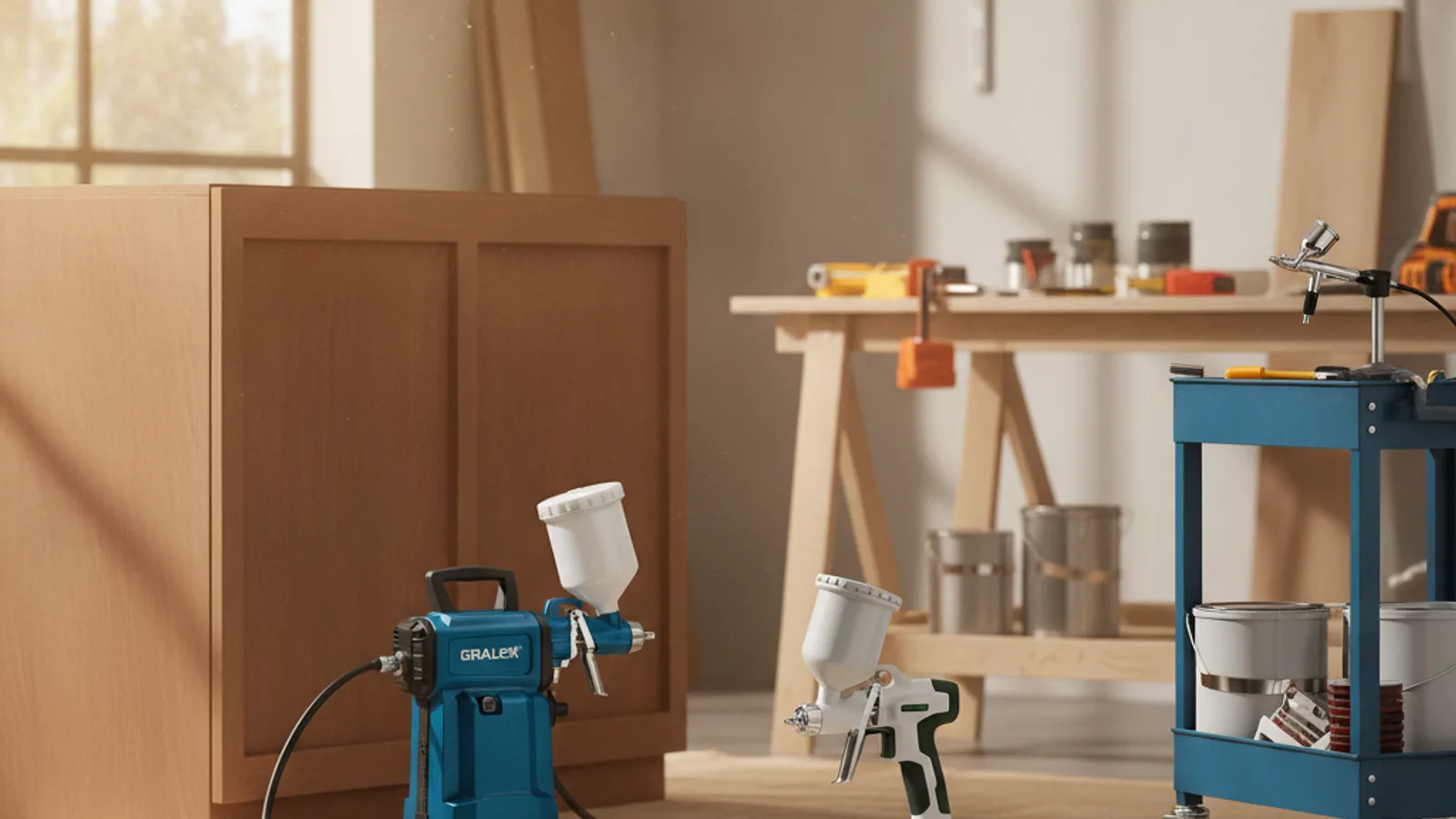
A good paint sprayer cuts a full room repaint from 2 hours to 25 minutes and delivers a finish smoother than most rollers, but the right type depends entirely on what you're painting. Airless sprayers (Graco Magnum X5, X7) use hydraulic pressure up to 3,000 PSI to push thick unthinned latex directly from a 5-gallon bucket; they're the choice for house exteriors, full rooms, and large decks. HVLP sprayers (Wagner, Fuji) use a turbine to blow high-volume air at low pressure, producing finer finish quality with less overspray, the right tool for cabinets, furniture, and trim.
This guide covers 8 picks across every use case, with concrete product recommendations, a full HVLP vs. airless decision table, and the accessories that make sprayers actually work.
At a Glance
 Graco Magnum X5 Airless Paint Sprayer, Interior & Exterior
 Wagner Spraytech 0518080 Control Spray Max Corded Hvlp...
 Fuji Spray 2203G Semi-PRO 2 - Gravity HVLP Spray System
 Graco Magnum X7 Cart Airless Paint Sprayer, Interior &...
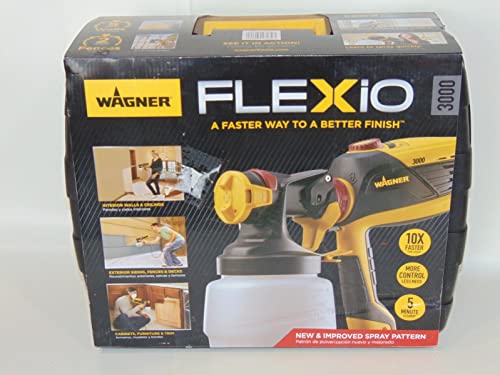 Wagner 0529085 FLEXiO 3000 HVLP Paint Sprayer
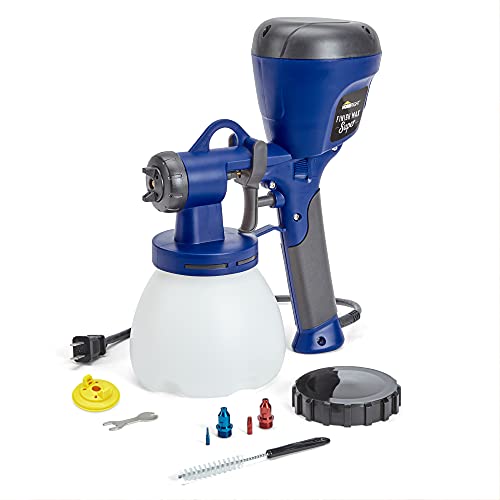 HomeRight C800971 Super Finish Max, Includes 3 Brass...
Product images and titles from Amazon. As an Amazon Associate we earn from qualifying purchases.
Quick Picks by Use Case
| Use case | Best Pick | Why | Price |
|---|---|---|---|
| Best overall airless | Graco Magnum X5 Stand | 0.27 GPM, 3,000 PSI, sprays unthinned latex, 125-ft hose | $270–310 |
| Best budget HVLP | Wagner Control Spray Max | 2-stage turbine, adjustable flow, 1.5 Qt container | $80–100 |
| Best fine finish (cabinets) | Fuji 2203G Semi-PRO 2 HVLP | 2-stage turbine, gravity-fed gun, pro atomization | $300–380 |
| Best for large exteriors | Graco Magnum X7 Cart | 0.31 GPM, cart-mounted, 100-ft hose, 25% faster than X5 | $380–430 |
| Best cordless | Ryobi PCL255B1 ONE+ 18V Kit | Battery-powered, no cord, 300+ ONE+ tool ecosystem | $150–200 |
| Best for decks & fences | Wagner Flexio 3000 HVLP | iSpray nozzle covers wide surfaces fast, adjustable pressure | $100–130 |
| Best beginner / small projects | HomeRight Finish Max Super | Entry-level HVLP, ~$60, excellent for furniture and crafts | $55–75 |
| Best professional | Graco Pro210ES Cart | 0.40 GPM ProConnect pump, designed for daily contractor use | $450–550 |
Best Overall Paint Sprayer
Graco Magnum X5 Stand Airless Sprayer
0.27 GPM · 3,000 PSI max · 515 reversible tip · 125-ft hose capacity · Primes from 5-gallon bucket
The Graco Magnum X5 is the best-selling paint sprayer for homeowners for a straightforward reason: it sprays unthinned interior and exterior latex directly from a 5-gallon bucket, covers a full 2,500 sq ft house in a day, and cleans up via a garden hose PowerFlush adapter in under 10 minutes. At 0.27 gallons per minute and 3,000 PSI, it handles everything from water sealers and stains to thick elastomeric exterior paints without thinning.
The stand design keeps the machine stable while you move the hose, and the 125-foot hose capacity (sold separately, comes with 50 ft) means you can work from ground level on a two-story house without moving the unit. The reversible RAC IV tip clears clogs in seconds by reversing spray direction, a feature that saves significant frustration when paint dries in the tip mid-job. If you're painting a house exterior, a large deck, or multiple rooms, the X5 pays for itself on the first project by eliminating contractor labor costs.
Pros
- Sprays unthinned latex, no diluting prep work
- 3,000 PSI handles thick coatings and elastomeric paints
- PowerFlush garden hose cleanup system
- RAC IV tip clears clogs instantly without stopping
- 125-ft hose capacity for two-story work
Cons
- Significant overspray, mask everything thoroughly
- Not ideal for fine cabinetry work (use HVLP instead)
- Pump seals need periodic replacement with heavy use
- Requires outdoor use or serious ventilation indoors
Best Budget HVLP Paint Sprayer
Wagner Control Spray Max HVLP
2-stage turbine · 1.5 Qt container · Adjustable flow, fan pattern & air volume · 3 spray patterns
The Wagner Control Spray Max is the right budget HVLP for DIYers who want a clean finish on furniture, trim, shutters, and fence sections without spending $300+ on a professional system. Its 2-stage turbine (two fans stacked vs. one in entry-level sprayers) delivers enough airflow to atomize latex properly, a big step up from the single-stage sprayers that struggle with anything thicker than stain. The 1.5-quart container works well for furniture-scale projects; for large surfaces, you'll refill frequently.
Three adjustable controls (flow rate, fan pattern, air volume) let you dial the spray for the material, narrow vertical pattern for door rails and stiles, wide horizontal fan for panel faces. Latex paint typically needs 10% water thinning at this price point; test on cardboard first. For the price, the finish quality on furniture, cabinets, and trim rivals systems costing twice as much.
Pros
- 2-stage turbine, better atomization than entry-level HVLP
- 3 adjustable controls for precise spray pattern
- Much less overspray than airless sprayers
- Good for furniture, trim, shutters, and small decks
- Under $100 complete
Cons
- Requires thinning thick latex 10–15%
- 1.5 Qt container needs frequent refills on large jobs
- Finish quality trails pro HVLP systems on cabinetry
- Not suitable for house exterior (too slow)
Best for Cabinets and Fine Finish Work
Fuji 2203G Semi-PRO 2 HVLP Gravity System
2-stage turbine · 400 cubic ft/min airflow · Gravity-fed gun · 1.3mm air cap · Non-bleed design
If you're refinishing kitchen cabinets, painting built-ins, or finishing furniture to a factory-quality level, the Fuji 2203G is where you step up from hobbyist HVLP. The gravity-fed gun feeds paint downward by gravity rather than siphoning up from a bottom cup, the result is more consistent atomization, less spitting, and the ability to spray with very little paint left in the cup (no wasted material at the bottom). The non-bleed design means the turbine keeps running between spray trigger pulls, maintaining consistent air pressure for even fan patterns.
At 400 CFM, this system sprays lacquers, conversion varnishes, water-based enamels, and alkyd paints that are too thick or too demanding for consumer HVLP systems. For kitchen cabinet refinishing, the most labor-intensive DIY finish project, the Fuji 2203G delivers a smooth, brush-mark-free result that would cost $1,500+ in professional labor. It's the right investment if cabinets, furniture, or fine woodwork are regular projects.
Pros
- Gravity-fed gun eliminates siphon inconsistency
- Handles lacquer, conversion varnish, and oil-based enamel
- 400 CFM delivers true professional atomization
- Non-bleed design for consistent pressure
- Excellent finish on cabinets, furniture, built-ins
Cons
- Premium price ($300–380) for a turbine system
- Requires practice to dial in on new materials
- Overkill for occasional fence/deck painting
- Turbine is bulky compared to handheld systems
Best Paint Sprayer for Large House Exteriors
Graco Magnum X7 Cart Airless Sprayer
0.31 GPM · 3,000 PSI · Cart-mounted · 100-ft hose included · ProConnect pump
The Magnum X7 is the X5's bigger brother: 0.31 GPM vs. 0.27 (roughly 15% faster material delivery), a cart with wheels and handle for easy repositioning around a house perimeter, and a 100-foot hose included in the box rather than the X5's 50-foot. For painting a full house exterior -2,500 to 3,500 sq ft of siding, trim, and fascia, that hose length and mobility difference is meaningful. The ProConnect pump system means you can replace the pump without tools in under 5 minutes if it ever needs service, rather than sending the whole unit in for repair.
Like the X5, it primes directly from a 5-gallon bucket and handles unthinned latex. If you're tackling a house repaint, a large barn, or multiple structures in one project and expect to do it annually, the X7 is the right size step up from the X5. For most homeowners doing a single project every few years, the X5 is sufficient.
Pros
- 0.31 GPM, faster coverage than X5 on large surfaces
- Cart design, moves easily around house perimeter
- 100-ft hose in box, reaches two-story peaks from ground
- ProConnect pump replacement without tools
- Same PowerFlush garden hose cleanup
Cons
- $100+ more than X5, overkill for smaller homes
- Cart size makes it harder to store than the stand X5
- Higher overspray than HVLP, mask meticulously
Best Cordless Paint Sprayer
Ryobi PCL255B1 ONE+ 18V Cordless Sprayer Kit
18V ONE+ battery · 3 spray patterns · 26 oz container · No cord, no compressor · Adjustable flow
The Ryobi ONE+ cordless paint sprayer solves the most annoying part of spray painting: the cord. Whether you're painting a backyard fence, staining a privacy screen, or refreshing patio furniture, being able to move freely without dragging a cord through wet paint or around post corners genuinely changes how the job feels. The battery-powered HVLP mechanism handles water-based stains, sealers, and diluted latex paint without any external air source.
Runtime is approximately 45–70 minutes on a fully charged 2.0Ah battery, sufficient for most furniture-scale or single fence section projects before swapping batteries. The included 2.0Ah battery and charger in the kit means you're ready to spray out of the box. The real value is the ONE+ ecosystem: the battery charges the same way as 300+ Ryobi tools, so if you already own Ryobi, your existing batteries work immediately.
Pros
- No cord, complete freedom of movement
- Kit includes battery + charger, ready to spray immediately
- 300+ ONE+ tools share the same batteries
- 3 spray patterns for different applications
- Lightweight and easy to maneuver
Cons
- Limited to water-based paints and stains (thin materials)
- Battery runtime ~45–70 min requires planning on bigger jobs
- Not suitable for thick latex or full house painting
- Container holds only 26 oz, frequent refills on large surfaces
Best Paint Sprayer for Decks and Fences
Wagner Flexio 3000 HVLP Sprayer
iSpray nozzle for broad coverage · detail finish nozzle included · X-Boost turbine · 1.0 Qt + 0.5 Qt containers
Decks and fences present a unique challenge: you need to cover a lot of horizontal or vertical surface area fast, but the spaces between boards and the grain of wood demand penetration rather than surface-film buildup. The Wagner Flexio 3000 comes with two nozzles, the iSpray broad nozzle for large surfaces (delivers wide fan coverage fast) and a detail nozzle for trim and tight spaces, which makes it the most versatile HVLP for outdoor wood work.
The X-Boost variable speed turbine lets you dial power from 1 to 10, matching material viscosity, thin deck stains run at 4–5, thicker solid-color deck coatings at 7–8. Most deck stains spray without thinning on the higher power settings. The included 1.0-quart container feeds the iSpray nozzle, while the 0.5-quart cup pairs with the detail nozzle for rail spindles and post detail work. For staining a 400 sq ft deck, expect 2–3 hours of total time including prep vs. 6–8 with a brush.
Pros
- Two nozzles, broad iSpray + detail finish nozzle
- X-Boost variable power (1–10) for different materials
- Penetrates between deck boards and fence pickets efficiently
- Handles deck stains without thinning at higher power settings
- Easy to clean with water (latex/water-based materials)
Cons
- Significant overspray in wind, pick a calm day for spraying
- Cord is 15 ft, extension cord needed for large decks
- 1.0 Qt container refills every 5–8 minutes on large surfaces
Best Beginner Paint Sprayer (Small Projects)
HomeRight Finish Max Super C800971
Single-stage HVLP · 27 oz container · Brass needle & nozzle · 3 spray patterns · Under $70
The HomeRight Finish Max Super is the most popular entry-level paint sprayer for furniture refinishers, crafters, and anyone trying spray painting for the first time. The brass needle and nozzle handles a wider range of materials than plastic-internals competitors at the same price, and the 27-ounce container is just large enough for painting a dresser or set of cabinet doors in one fill. For the cost of a rattle can project, you get a reusable tool that produces finer, more controllable finishes than aerosols.
The limitation is honest: single-stage turbines don't have enough airflow to properly atomize thick latex without significant thinning (20–30% water). The Finish Max excels at chalk paints, milk paints, craft paints, and water-based stains, all of which spray beautifully at lower viscosity. For anyone who wants to try spraying before committing to a $270+ airless unit, this is the correct starting point.
Pros
- Under $70, lowest cost of entry for spray painting
- Brass internals handle more materials than plastic equivalents
- Works well with chalk paint, milk paint, and water-based stains
- Lightweight (1.2 lbs) for overhead and detail work
- Good for furniture, crafts, and small detail projects
Cons
- Single-stage turbine requires significant thinning for thick latex
- 27 oz container too small for room-scale or exterior work
- Not suitable for full-room or exterior house painting
- Finish quality trails 2-stage turbine systems
Best Professional Paint Sprayer
Graco Pro210ES Cart Airless Sprayer
0.40 GPM · 3,300 PSI · ProConnect pump · 50 ft hose · Designed for daily contractor use
The Graco Pro210ES is the entry point for professional-grade airless spraying: the same core design that painting contractors run daily on commercial interiors, rental property refreshes, and high-volume residential work. At 0.40 GPM, it delivers 50% more material flow than the Magnum X5, the difference between painting a room in 12 minutes or 18 minutes, which adds up dramatically on multi-unit jobs. The industrial-grade pump is designed for sustained daily operation, not the occasional weekend project.
The ProConnect pump replacement system means a worn pump swaps out without sending the unit in for service. Professional crews also appreciate the larger intake tube that handles 5-gallon buckets more reliably at high spray rates. For serious DIYers running rental property refreshes, commercial kitchen repaints, or any situation where a day's work means 8+ hours of spraying, the investment in Pro210ES-grade reliability prevents the repair downtime that consumer units eventually require.
Pros
- 0.40 GPM, 50% faster than Magnum X5
- Industrial pump built for sustained daily operation
- ProConnect replacement system, pump swaps without tools
- 3,300 PSI handles the thickest commercial-grade coatings
- Designed for professional daily use
Cons
- $450–550, significant overkill for occasional homeowner use
- Higher overspray requires experienced masking technique
- Heavier and larger than consumer-grade units
- Operating cost (tips, seals) higher at professional use rates
Airless vs. HVLP: Which Type Do You Need?
| Project | Best Type | Recommended Pick |
|---|---|---|
| House exterior (full repaint) | Airless | Graco Magnum X5 or X7 |
| Interior rooms (walls + ceiling) | Airless | Graco Magnum X5 |
| Kitchen cabinet refinishing | HVLP | Fuji 2203G Semi-PRO 2 |
| Deck staining | HVLP or cordless | Wagner Flexio 3000 or Ryobi ONE+ |
| Fence painting | HVLP or airless | Wagner Flexio 3000 (small fence) / X5 (long run) |
| Furniture refinishing | HVLP | Wagner Control Spray Max or Fuji 2203G |
| Trim and shutters | HVLP | Wagner Control Spray Max |
| Garage door | Airless | Graco Magnum X5 |
| Small crafts / chalk paint | HVLP (entry-level) | HomeRight Finish Max Super |
| Daily contractor use | Professional airless | Graco Pro210ES Cart |
The key question: what are you painting and how often? Airless if: large surface area, thick latex paint, speed is the priority. HVLP if: fine finish quality, cabinetry, furniture, or spraying where overspray control matters. Cordless if: outdoor furniture and fences where cord management is the main friction point.
Essential Paint Sprayer Accessories
- RAC X reversible spray tips (multiple sizes), the included tip on most sprayers is a 515 (10-inch fan, 0.015 orifice). Add a 411 for trim/cabinets, 517 for exterior latex, and 311 for stains. Reversible tips clear clogs by twisting 180°, keep backups for every project.
- Extension hose (25-ft or 50-ft), for two-story work, adding 50 ft to the included hose lets you keep the sprayer on the ground while reaching peak eaves. Ensure the hose is rated for your sprayer's PSI.
- Spray respirator (organic vapor + N95), paint mist carries solvents and fine particles into the lungs. A half-face respirator with organic vapor cartridges is mandatory for oil-based materials; N95 minimum for all spraying. Never spray indoors without one.
- Canvas drop cloths (9x12 ft, 2-pack), plastic sheeting moves and tears; canvas stays put and absorbs overspray. Cover every floor, shrub, and adjacent surface within 10 feet of airless spraying.
- FrogTape multi-surface painter's tape, standard masking tape bleeds under spray pressure. FrogTape's PaintBlock technology seals the edge against bleed-through, giving clean lines on trim and window frames.
- Paint strainer bags (5-gallon, 10-pack), debris and dried-paint skin in the can clogs spray tips instantly. Always strain latex paint through a 60-mesh strainer bag before loading the sprayer, especially with older or partially-used cans.
- PowerFlush garden hose adapter (Graco), turns cleanup from a 20-minute bucket-rinse into a 5-minute garden hose flush for Graco airless sprayers. The single best time-saver for regular sprayer users.
- Spray sock / sprayer cover bag, slip over the sprayer body to protect the motor and pump housing from overspray fallout during use and from dust during storage.
Frequently Asked Questions
What is the difference between HVLP and airless paint sprayers?
Airless sprayers use hydraulic pressure (1,500–3,300 PSI) to force paint through a small tip, atomizing it without air. They're fast, handle thick unthinned latex, and cover large surfaces efficiently, ideal for house exteriors and full rooms. HVLP sprayers use a turbine to deliver high-volume air at low pressure, producing finer atomization with less overspray. HVLP is the right choice for cabinets, furniture, and finish work where surface quality matters more than speed.
Do I need to thin paint before spraying?
It depends on the sprayer. High-end airless sprayers (Graco X5, X7) spray unthinned latex directly. HVLP turbine sprayers typically require thinning thick latex 10–15% with water. Test on cardboard first: orange-peel texture or sputtering means the paint is too thick. Stains and sealers spray without thinning in most cases. Always follow the paint manufacturer's viscosity recommendations when available.
How do I prevent overspray?
Mask everything within 10 feet with canvas drop cloths and painter's tape. Maintain the correct distance from the surface (8–12 inches for airless, 6–8 inches for HVLP). Keep the gun moving at consistent speed. Start and stop the trigger off the edge of the workpiece. HVLP inherently produces less overspray than airless, if overspray is a major concern indoors or near vehicles, HVLP or cordless is the better choice.
How do I clean a paint sprayer after use?
For latex paint: immediately pour remaining paint back into the can, then flush the system with warm water until it runs clear. For airless sprayers, run 1–2 gallons of rinse water through the system. Clean the tip, filter, and cup separately. For oil-based paints, use mineral spirits. Never let paint dry in the sprayer, dried paint requires tip replacement and pump cleaning that can take hours. Graco's PowerFlush garden hose adapter cuts cleanup time to under 5 minutes.
Can a paint sprayer replace a roller for interior room painting?
Yes, if you're comfortable masking. A sprayer covers a 12×12 room in 15–20 minutes vs. 60–90 with a roller, but requires 30–45 minutes of masking first. Net time savings are significant on multi-room or full-house repaints. The finish quality from a good airless sprayer is excellent, smoother than most roller applications, with no lap marks. For a single accent wall, a roller is still faster when masking time is included.
What spray tip size do I need?
For interior walls and ceilings with latex: a 515 tip (10-inch fan, 0.015 orifice) is the standard starting point. For exterior latex: 515–517. For deck stains: 311–415. For cabinet enamel: 210–312. The tip number encodes fan width and orifice: a 515 has a 10-inch fan (5 × 2) and 0.015-inch orifice. Start with the tip included in your sprayer and experiment on cardboard before the actual project.