Best Circular Saws 2026: Corded, Cordless & Track Saw Picks

A circular saw is the first power saw most DIYers buy, and it remains the most-used saw in framing, decking, and remodeling for one reason: nothing else cuts sheet goods, dimensional lumber, and trim as fast in the field. But the corded vs. cordless decision, the 7.25-inch vs. 6.5-inch blade question, and the sidewinder vs. worm-drive distinction all have specific right answers depending on your work-and getting any one of them wrong means a saw that fights you on every cut.
This guide cuts through those decisions for eight distinct use cases, with honest specs and tradeoff analysis for each pick. The amperage and cut-depth numbers below are verified manufacturer specs; the real-world observations come from production use in framing and finish carpentry.
At a Glance
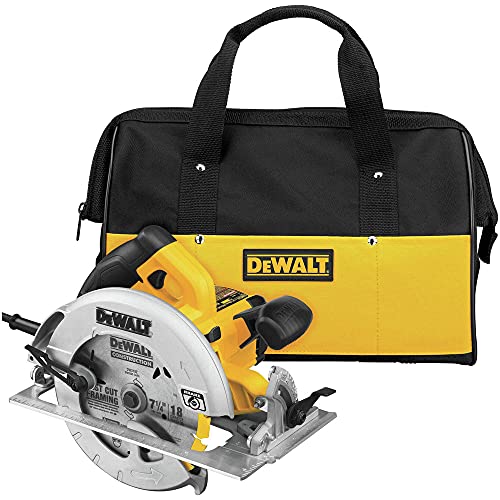 DEWALT Circular Saw, 7-1/4 inch, Pivoting with up to...
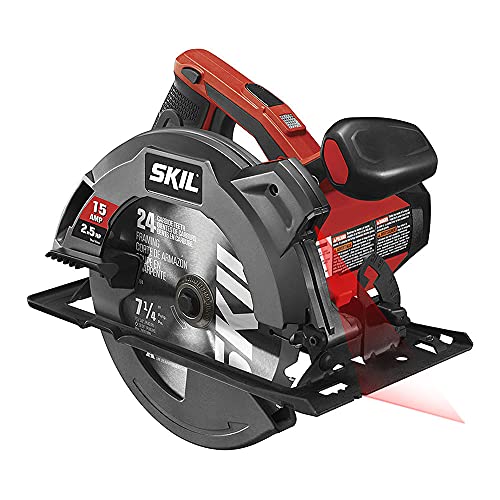 SKIL 15 Amp 7-1/4 Inch Circular Saw with Single Beam...
 Milwaukee 2732-20 M18 Fuel 18 Volt Lithium-Ion 15 Amp...
 DEWALT 20V MAX Circular Saw Cordless with Brake, 7-1/4...
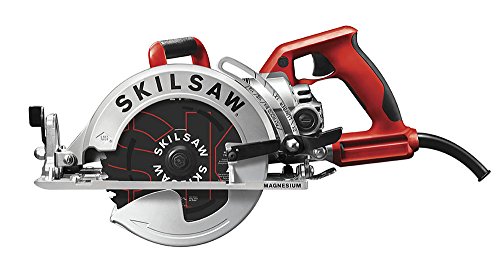 SKILSAW SPT77WML-01 15-Amp 7-1/4-Inch Lightweight Worm...
 Makita XSH04ZB 18V LXT® Lithium-Ion Sub-Compact...
Product images and titles from Amazon. As an Amazon Associate we earn from qualifying purchases.
Quick Picks by Use Case
| Use case | Best Pick | Blade | Price range |
|---|---|---|---|
| Best overall corded | DeWalt DWE575SB 15A 7.25" | 7.25" | $115–140 |
| Best budget corded | Skil 5280-01 15A 7.25" | 7.25" | $55–75 |
| Best cordless | Milwaukee M18 FUEL 2732-20 7.25" | 7.25" | $200–240 (tool only) |
| Best budget cordless | DeWalt DCS570B 20V MAX 7.25" | 7.25" | $120–145 (tool only) |
| Best worm-drive | Skilsaw SPT77WML-01 15A Worm-Drive | 7.25" | $180–220 |
| Best compact cordless | Makita XSH04ZB 18V LXT 6.5" | 6.5" | $140–180 (tool only) |
| Best for sheet goods / trim | DeWalt DCS571B 20V ATOMIC 4.5" | 4.5" | $70–95 (tool only) |
| Best track saw (zero tearout) | Festool TS 55 REQ-F Plus 6.5" Track Saw | 6.5" | $550–620 (saw only) |
Key Specs: What Actually Matters in a Circular Saw
| Spec | What it means | Why it matters |
|---|---|---|
| Blade size | Diameter of the blade (6.5" or 7.25" common) | 7.25" cuts deeper; 6.5" is lighter for cordless battery efficiency |
| Cut depth at 90° | Maximum depth through stock at perpendicular | 7.25" saws cut 2.5"; enough for 2x lumber in one pass |
| Cut depth at 45° | Maximum depth through stock at bevel | Must exceed your lumber thickness at miter angle |
| Amps (corded) | Motor draw at full load | 15A handles hardwood and LVL without bogging; 13A fine for softwood framing |
| No-load RPM | Blade speed at zero load | 5,000+ RPM gives clean cuts; higher RPM matters more in thin material |
| Bevel capacity | Maximum bevel angle | 56° is the pro standard (cuts compound angles); 45° is the minimum for trim work |
| Footplate | Base that rides the material | Magnesium footplates are flatter and lighter; stamped steel flexes and skips |
Blade size & cut depth by saw type
| Saw type | Blade size | Cut depth at 90° | Cut depth at 45° | Best for |
|---|---|---|---|---|
| Standard 7.25" corded | 7.25" | 2.5" | 1.75" | Framing, decking, structural lumber |
| 7.25" cordless | 7.25" | 2.5" | 1.75" | Framing, decking, same depth, battery convenience |
| 6.5" cordless | 6.5" | 2.25" | 1.5" | Trim, sheet goods, light framing; lighter battery draw |
| 4.5" compact | 4.5" | 1.5" | 1.1" | Plywood, OSB, trim, single-pass 2x at 90° only |
| Track saw 6.5" | 6.5" | 2.2" | 1.5" | Sheet goods, cabinetry, zero-tearout finish cuts |
The 8 Best Circular Saws of 2026
DeWalt DWE575SB 15-Amp 7.25-Inch Lightweight Circular Saw
The DWE575SB is the most-refined corded 7.25-inch circular saw on the market at a price that makes it the default recommendation for homeowners and contractors alike. At 8.8 pounds, it's the lightest corded 7.25-inch saw in its class, the magnesium footplate and upper guard (not stamped steel) account for the 1.5 lb advantage over competitors in the same tier. The 15-amp motor spins the blade at 5,200 RPM and pushes through full-depth 2x6 pressure-treated lumber, LVL beams, and doubled 2x material without bogging. The stainless-steel shoe is flat and true out of the box; the bevel range is 0–56° with positive stops at 22.5° and 45°; the electric brake stops the blade in under 2 seconds when you release the trigger. The DWE575SB's sight-line design (blade on the right for right-handers) is clean, and the rubber over-mold handle absorbs vibration noticeably better than bare plastic competitors. DeWalt's service network is the best in the industry.
Pros
- 8.8 lbs, lightest corded 7.25" saw at this price
- Magnesium footplate: flatter, lighter, more durable than stamped steel
- 15A motor handles LVL and PT lumber without bogging
- Electric brake for quick blade stop between cuts
- 0–56° bevel with positive stops at 22.5° and 45°
Cons
- Cord limits range on large framing sites
- Blade-right design less natural for left-handers reading the cut line
- Dust port not included (sold separately as an add-on)
Skil 5280-01 15-Amp 7.25-Inch Circular Saw
The Skil 5280-01 delivers genuine 15-amp performance at a price point that makes it the right choice when budget is the primary constraint. The 5,300 RPM no-load speed matches the DeWalt, and the 2.5-inch depth-of-cut at 90° handles all standard dimensional lumber. The stamped steel footplate is heavier and less premium than magnesium, but it's flat enough for accurate cuts and holds its bevel settings securely. The blade-brake engages within a second of trigger release. Bevel range is 0–51°, which covers 45° miters without issue. Skil has been making circular saws since the 1920s and the 5280 has a long track record for reliability. This is the saw to buy if you need a capable 7.25-inch corded unit and the DeWalt is $50+ more expensive or out of stock.
Pros
- 15A motor at a budget price, genuine power, not compromised
- 5,300 RPM, fast, clean cuts in dimensional lumber
- 0–51° bevel covers all standard angles
- Consistently priced $40–60 below equivalent DeWalt
Cons
- Stamped steel footplate (heavier, less flat than magnesium)
- No electric brake
- Build quality noticeably below DeWalt for sustained heavy use
Milwaukee M18 FUEL 2732-20 7.25-Inch Brushless Circular Saw
The Milwaukee M18 FUEL 2732-20 is the best cordless circular saw in its class and it's not particularly close. The POWERSTATE brushless motor delivers 5,800 RPM and drives a 7.25-inch blade at full framing depth, same depth as any corded saw, with enough power to rip hardwood and plow through PT lumber on a 5.0Ah pack. REDLINK PLUS intelligence prevents over-discharge, optimizes runtime, and stops the motor if overloaded. The POWERSTATE controller means no brushes to replace and significantly longer motor life than brushed cordless saws. The magnesium footplate is flat and true; the 0–55° bevel with 45° and 22.5° positive stops is identical to what you'd expect from a premium corded saw. Battery life on a 5.0Ah pack is approximately 70 cuts in 2x4 or 50 cuts in 2x6, more than enough for a morning's framing before a swap. The only reason not to buy this is if you're already committed to another battery platform.
Pros
- 5,800 RPM POWERSTATE brushless motor, best-in-class cordless power
- Full 2.5" cut depth at 90°, identical to corded 7.25" saws
- Magnesium footplate: flat, light, durable
- REDLINK PLUS overload protection extends battery and motor life
- 0–55° bevel with positive stops
Cons
- Tool-only price $200+ (battery sold separately)
- Locks you into Milwaukee M18 battery platform
- Heavier than 6.5" compact cordless saws at 9.0 lbs
DeWalt DCS570B 20V MAX 7.25-Inch Brushless Circular Saw
The DCS570B is the entry point for full-size 7.25-inch cordless performance at a price that doesn't require owning a premium M18 or FLEXVOLT kit. The brushless motor provides 5,000 RPM and handles the same 2.5-inch cut depth at 90° as any 7.25-inch saw. Runtime on a 2.0Ah pack is modest (30–40 cuts in 2x4), so plan to use a 4.0Ah or 5.0Ah battery for sustained framing. The footplate is aluminum (lighter than stamped steel, slightly less flat than magnesium premium options). Bevel adjusts 0–56° with a 45° positive stop. If you're already in the DeWalt 20V MAX ecosystem, this saw is a natural and affordable addition; if you're starting fresh, consider whether the Milwaukee kit (M18 FUEL + 2x battery starter) is within budget since the motor quality gap is noticeable over a full day of cutting.
Pros
- $120–145 tool-only (entry point for brushless cordless 7.25")
- Full 2.5" cut depth at 90°, same as premium cordless saws
- Brushless motor for longer life than brushed cordless saws
- 0–56° bevel with 45° positive stop
- Compatible with entire DeWalt 20V MAX battery ecosystem
Cons
- Lower power output than M18 FUEL (5,000 vs. 5,800 RPM)
- 2.0Ah battery gives only 30–40 cuts; 4Ah+ recommended
- Aluminum footplate less premium than magnesium
Skilsaw SPT77WML-01 15-Amp Magnesium Worm-Drive Circular Saw
The Skilsaw worm-drive is the saw that built the West Coast framing industry, and the SPT77WML-01 is the modern expression of that 100-year-old design. The worm-gear mechanism places the motor inline behind the blade, creating two advantages: the torque multiplication from the right-angle gear reduction (more torque than any sidewinder at the same amperage), and the blade-left position that lets right-handers see the cut line naturally without craning over the motor. The magnesium body is the key upgrade over older steel worm-drives, it brings the weight to 12.5 lbs rather than 16+ lbs while maintaining rigidity. The 15-amp motor pulls through LVL, doubled 2x10 headers, and knot-heavy PT lumber without hesitation. Worm drives require periodic oil level checks (every 25 hours of use); the SPT77WML uses standard 30-weight oil. This is the professional framer's saw; if you frame walls, cut rafters, or do production lumber cutting, it's the right tool.
Pros
- Worm-drive torque excels in production framing, LVL, and PT lumber
- Blade-left design: right-handers see cut line naturally
- Magnesium body: 12.5 lbs (significantly lighter than steel worm-drives)
- 15A motor handles the heaviest framing material
- Trusted by professional framers for 100 years
Cons
- Requires periodic oil level checks (30-weight oil)
- 12.5 lbs is heavier than sidewinder saws
- Less maneuverable for overhead and fine trim work
- $180+ is a premium over standard sidewinders
Makita XSH04ZB 18V LXT 6.5-Inch Rear-Handle Circular Saw
The Makita XSH04ZB occupies a distinctive niche: the only mainstream 6.5-inch cordless saw with a rear-handle design (rather than the top-handle that most cordless saws use). The rear handle puts the grip in line with the blade force, which means a more natural push motion and less wrist fatigue during extended cutting sessions. The 18V LXT motor delivers 4,600 RPM and provides a 2.25-inch cut depth at 90°, enough for all trim, sheet goods, and 2x framing lumber. The 6.5-inch blade vs. 7.25-inch saves roughly 0.5 lbs per charge cycle and extends battery runtime by approximately 15–20%. The XSH04ZB is ideal for trim carpenters, finish work, and any application where precision, lower weight, and battery runtime matter more than maximum cut depth. It's also the best pairing with Makita's 18V battery ecosystem for users already running LXT tools.
Pros
- Rear-handle design, more natural push motion, less wrist fatigue
- 6.5" blade = longer battery runtime and lighter weight vs. 7.25"
- 2.25" cut depth handles all 2x lumber and trim applications
- 4,600 RPM gives clean finish cuts in plywood and hardwood
- Compatible with Makita 18V LXT battery ecosystem (200+ tools)
Cons
- 6.5" blade cannot cut as deep as 7.25" at steep bevels
- Rear handle less natural for quick plunge cuts
- Locks you into Makita LXT platform if not already there
DeWalt DCS571B ATOMIC 20V MAX 4.5-Inch Circular Saw
The DCS571B targets a specific use case that often gets overlooked: cutting plywood, OSB, and trim where full framing depth is not needed and a smaller, lighter saw is a genuine advantage. At 4.1 lbs, it's nearly half the weight of a 7.25-inch cordless saw, and when you're carrying a sheet of plywood to the saw horses and making 20 cuts, that difference is real. The 4.5-inch blade cuts 1.5 inches at 90°, which handles single 2x lumber, all 3/4-inch sheet goods, plywood, OSB, 5/4 decking, and trim stock. The ATOMIC brushless motor runs at 4,500 RPM; blade change is tool-free. Because it uses DeWalt's standard 20V MAX batteries, it charges from the same charger as your drill and driver. The DCS571B is the right saw if your work is primarily sheet goods, finish, and trim rather than structural framing.
Pros
- 4.1 lbs, dramatically lighter than full-size circular saws
- Perfect for plywood, OSB, trim, and 3/4" sheet goods
- Brushless ATOMIC motor for battery efficiency
- Tool-free blade change
- Uses DeWalt 20V MAX batteries (backward compatible with existing tools)
Cons
- 1.5" cut depth only, not a framing saw
- 4.5" blades less available at local stores than 7.25" blades
- Cannot rip full 1.5" lumber at 45° bevel
Festool TS 55 REQ-F Plus 6.5-Inch Plunge-Cut Track Saw
The Festool TS 55 REQ is the professional cabinetmaker and finish-carpenter's answer to a problem a standard circular saw cannot solve: zero-tearout, perfectly straight cuts in hardwood plywood and melamine without a router table or table saw. The track (sold separately, though often bundled) provides a zero-clearance splitter strip along the cut line, the anti-chip strip seals both edges of the cut as the blade exits the material, eliminating the top-face tearout that makes circular saws unusable for finish cabinetry. The plunge-cut mechanism lets you start a cut mid-panel, which is critical for cabinet cutouts (sink openings, appliance panels). The 6.5-inch RIVING KNIFE follows the blade to prevent binding. MMC electronics modulate power to maintain constant blade speed under load. The dust extraction port (Festool CT dust extractor pairs perfectly) captures 90%+ of dust, which matters in a shop or on a client's job site. The $550+ price is justified if panel work is a significant part of your income; it is not a homeowner tool.
Pros
- Zero-tearout track system, finish-quality cuts in hardwood plywood and melamine
- Plunge-cut mechanism for mid-panel starts (sink cutouts, appliance openings)
- MMC electronics maintain constant blade speed under load
- Connects to Festool dust extractors for near-dustless operation
- Industry-standard for cabinet shops and finish carpenters
Cons
- $550+ saw, $100–200 track(s) additional, substantial investment
- Requires Festool or compatible track to realize the zero-tearout benefit
- Overkill for framing, decking, or general construction
- Heavier than standard circular saws at 8.6 lbs
Circular Saw Decision Guide
| Your situation | Best choice | Why |
|---|---|---|
| General DIY framing, decking, demo | DeWalt DWE575SB (corded) | 15A handles everything; lighter than competitors |
| Budget homeowner, occasional use | Skil 5280-01 | 15A performance at ~$60 street price |
| Framing + want cordless convenience | Milwaukee M18 FUEL 2732-20 | Best cordless power in class; full 7.25" depth |
| Already in DeWalt 20V ecosystem | DeWalt DCS570B | Compatible battery, full depth at budget cordless price |
| Production framing (West Coast style) | Skilsaw SPT77WML-01 worm-drive | Torque, blade-left sight line, professional durability |
| Trim, finish carpentry, Makita LXT user | Makita XSH04ZB | Rear handle + 6.5" = lighter, better runtime for trim work |
| Plywood, OSB, light trim only | DeWalt DCS571B ATOMIC 4.5" | Lightest option; size-right for sheet goods |
| Cabinet shop, finish panels, melamine | Festool TS 55 REQ + track | Zero-tearout track system unmatched for cabinet-quality cuts |
Recommended Accessories
- Freud Diablo D0724X 7.25" 24T Framing Blade, the reference standard framing blade; TiCo Hi-Density carbide outlasts standard blades 3–5x
- Freud Diablo D0760A 7.25" 60T Fine-Finish Blade, 60-tooth ATB for plywood, trim, and sheet goods; clean cuts both faces
- Kreg Rip-Cut Circular Saw Edge Guide, cuts straight rips in plywood up to 24" from the edge without a track saw
- 7-Inch Speed Square / Rafter Angle Square, fastest way to guide a 90° crosscut freehand; essential for framing
- Circular Saw Straight-Cut Guide Rail, budget alternative to a track saw for consistent straight rips in sheet goods
- 3M Peltor X4A Ear Muffs, circular saws run 98–105 dB; hearing protection is not optional for extended use
Frequently Asked Questions
What size circular saw blade do I need, 6.5-inch or 7.25-inch?
The 7.25-inch (184mm) blade is the standard for framing and general construction, it cuts 2x lumber at 90° in a single pass (2.5-inch depth) and at 45° bevel cleanly through dimensional lumber. The 6.5-inch blade is the cordless standard: smaller mass means longer battery runtime and a lighter saw. For trim, sheet goods, decking, and general DIY work, a 6.5-inch cordless is all you need. Only choose 7.25-inch when you're framing walls, cutting rafters, or doing heavy lumber work where you need the full depth or prefer corded power.
Worm-drive vs sidewinder circular saw, what's the difference?
Worm-drive saws (Skilsaw, DeWalt rear-handle) have the motor behind the blade, connected via a right-angle gear reduction. They produce more torque, handle better in overhead or vertical cuts, and the inline design lets you see the cut line naturally if you're right-handed. Sidewinder saws (inline motor beside the blade) are lighter, faster spinning, and more compact. For framing on the West Coast, worm-drive is the professional standard. East Coast framers largely use sidewinders. For DIYers and remodelers, a sidewinder is almost always the right choice: lighter, lower maintenance, and perfectly capable for all cutting tasks.
How many amps do I need in a corded circular saw?
Most 7.25-inch corded circular saws fall between 13 and 15 amps. The 15-amp motor handles full-depth cuts in engineered lumber (LVL beams, doubled 2x material) and hardwood without bogging down. For framing, decking, and sheet goods, 13–14 amps is plenty. For heavy commercial framing with pressure-treated lumber, hardwood, and full-depth LVL cuts all day, pay for 15 amps.
What's the best circular saw blade for cutting plywood and sheet goods?
For plywood, OSB, and sheet goods, use a 40-tooth (ATB) or 60-tooth fine-finish blade. The higher tooth count produces cleaner, splinter-free edges. Diablo's D0740A 40-tooth or D0760A 60-tooth blades are the reference standard for sheet goods. Always cut plywood with the good face down when using a circular saw (the blade cuts upward through the top face, which gets the tearout).
Can I use a cordless circular saw for framing a deck or outbuilding?
Yes, modern 20V MAX and 18V cordless saws handle deck and outbuilding framing competently. Battery life is the real constraint: expect 50–70 cuts per charge on a 2x4 with a 5Ah pack. For a full deck framing day (200+ cuts), bring at least two batteries or plan to charge mid-day. The convenience of no cord, working at height, at the end of a deck run, moving between lumber stacks, often outweighs the battery management overhead. If you're cutting hardwood or LVL beams all day, stay corded.
Related: Best Miter Saws 2026 · Best Cordless Drills 2026 · Best Table Saws 2026 · Best Impact Drivers 2026