Best Extension Ladders 2026: Fiberglass, Aluminum & Multi-Position Picks
Buying the wrong extension ladder is one of the most common and expensive mistakes in home maintenance. The most common version: buying a 16-foot ladder for a two-story house, discovering it does not reach the gutter line, and having to buy again. The second most common: buying aluminum when you work near power lines because it is lighter and cheaper, not realizing aluminum conducts electricity. This guide gives you the framework to buy correctly once, then applies it to eight specific picks for every buyer from the homeowner cleaning gutters once a year to the roofer who loads a ladder off a truck every morning.
All eight picks below are verified for the US Amazon marketplace as of July 2026. Every named model uses a confirmed Amazon product page link -- no guessed ASINs.
At a Glance
 Werner D6224-2 300-Pound Duty Rating Fiberglass Flat...
 Werner D1520-2 Ladder, Foot, 20 feet, No Color
 Werner D6228-2 300-Pound Duty Rating Fiberglass Flat...
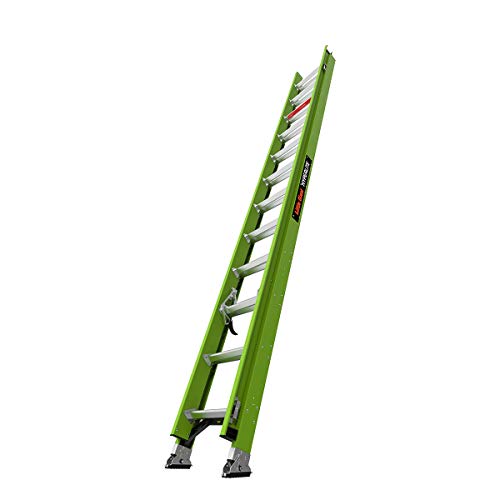 Little Giant Ladders, HyperLite, 24', Extension...
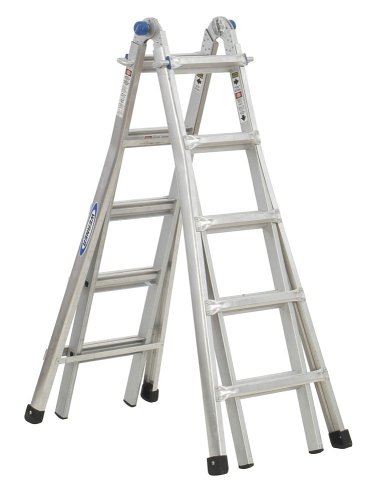 Werner MT-22 300-Pound Duty Rating Telescoping...
 Werner D1524-2 Ladder, 24-Foot
Product images and titles from Amazon. As an Amazon Associate we earn from qualifying purchases.
Quick Picks by Buyer Type
| Buyer type | Best pick | Length | Material | Reach height |
|---|---|---|---|---|
| Best overall (two-story homeowner) | Werner D6224-2 24ft Fiberglass | 24 ft | Fiberglass | 21 ft |
| Best budget (one-story, gutter cleaning) | Werner D1520-2 20ft Aluminum | 20 ft | Aluminum | 17 ft |
| Best 28ft (tall two-story, steep roofs) | Werner D6228-2 28ft Fiberglass | 28 ft | Fiberglass | 25 ft |
| Best lightweight fiberglass | Little Giant HyperLite 24ft | 24 ft | Fiberglass | 21 ft |
| Best versatile (multi-position) | Werner MT-22 Multi-Ladder | 22 ft ext. | Aluminum | 19 ft |
| Best 24ft aluminum | Werner D1524-2 24ft Aluminum | 24 ft | Aluminum | 21 ft |
| Best professional 32ft | Werner D6232-2 32ft Fiberglass | 32 ft | Fiberglass | 29 ft |
| Best pro/commercial 40ft | Werner D6240-2 40ft Fiberglass | 40 ft | Fiberglass | 36 ft |
How to Size an Extension Ladder
| Task / Structure | Working height needed | Minimum ladder length |
|---|---|---|
| One-story gutter cleaning (eave at 10–12 ft) | 10–13 ft | 16–20 ft |
| Two-story gutter cleaning (eave at 17–20 ft) | 17–21 ft | 24 ft |
| Two-story with steep gable or dormer | 22–25 ft | 28 ft |
| Three-story or tall commercial structure | 26–29 ft | 32 ft |
| Commercial/tall tree/industrial work | 33–36 ft | 40 ft |
The reach formula: Subtract 4 feet from the overall ladder length to estimate your safe working reach height at the correct 75-degree angle. A 24-foot ladder reaches approximately 21 feet. This accounts for the base-to-wall offset at the bottom and the hand-hold rungs at the top. Always extend the ladder at least 3 rungs (3 feet) above the landing surface when stepping onto a roof.
Key Specs: What Actually Matters
| Spec | What it means | Why it matters |
|---|---|---|
| Duty rating | Maximum rated load: your weight + tools + materials | Type IA (300 lbs) is the standard for quality ladders; budget models sold at big-box stores often carry Type II (225 lbs) -- not enough margin for a tool belt and bucket |
| Overall length vs. reach height | Overall = ladder fully extended end-to-end; reach = working height at correct angle | Ads show overall length; what you actually reach is 3–4 feet less; buying based on overall length without this correction is the most common sizing mistake |
| Fiberglass vs. aluminum rails | Material of the side rails | Fiberglass is non-conductive -- safer near electrical lines; aluminum is lighter and cheaper but conducts electricity and corrodes faster with outdoor exposure |
| D-rung vs. round rung | Cross-section shape of the rungs you step on | Flat D-rungs are wider and more comfortable underfoot during extended use; round rungs dig into the arch after 20+ minutes on a ladder |
| ALFLO rung joint | Werner's patented rung-to-rail connection | Prevents the rung from rotating in the rail -- a ladder with loose rungs twists and rocks; ALFLO locks rungs permanently rigid |
| Shu-Lok feet | Dual-position shoe: flat pad or spur stake | Flat position for hard surfaces (concrete, asphalt); spur position locks into soft ground (soil, grass); two positions in one shoe eliminates swapping accessories |
| Lock mechanism | Spring-loaded cam locks that secure the fly section at chosen extension | Both locks must engage fully before climbing; rattling or single-side engagement means the fly section can slip under load |
The 8 Best Extension Ladders of 2026
Werner D6224-2 24-Foot Type IA Fiberglass Extension Ladder
The Werner D6224-2 is the ladder most two-story homeowners should buy and keep for 20 years. At 24 feet overall, it reaches 21 feet of working height -- enough to top the eave on nearly every standard two-story residential structure. The fiberglass rails are non-conductive, making this ladder safe to use on exterior walls where power lines and service drops run. Werner's flat D-rungs are noticeably more comfortable than the round rungs found on budget ladders: you can stand on them for extended periods without the arch pain that round rungs cause after 10-15 minutes. The ALFLO rung joint locks each rung rigidly into the rail -- no twist, no rock, no rattle. Shu-Lok dual-action feet swivel between a flat pad for concrete and a spur for soil without any tools or accessories to swap. The base and fly sections separate so you can use the base section alone as a shorter single ladder for interior stairway work. Spring-loaded rung locks engage both sides simultaneously and audibly click into position. This is Werner's most popular fiberglass model for residential use -- the D6200-2 series has been the industry reference for decades, and the D6224-2 is the right length for 80% of homeowners.
Pros
- 21ft working reach: covers the eave on most two-story houses
- Fiberglass rails: non-conductive near electrical hazards
- Flat D-rungs: more comfortable underfoot than round rungs
- ALFLO joint: rungs are permanently rigid, no twist under load
- Shu-Lok dual-action feet work on concrete and soil
Cons
- Heavier than aluminum equivalent -- 42 lbs for a 24ft fiberglass
- Costs more than aluminum models at the same length
- 24ft is the maximum length before the D6228-2 -- no intermediate step
Werner D1520-2 20-Foot Type IA Aluminum Extension Ladder
For homeowners with a one-story house or a ranch-style home where the gutters sit at 10-12 feet, the Werner D1520-2 is the correct choice. At 20 feet overall and 17 feet of working reach, it handles every one-story exterior task: gutter cleaning, exterior painting, window washing, and roof inspection from the eave. Aluminum construction makes it meaningfully lighter than a fiberglass ladder of equivalent size -- the D1520-2 weighs around 28 lbs, versus 38+ lbs for a 24ft fiberglass model. That weight difference matters when you are carrying a ladder solo from a garage, around a house, and up a driveway multiple times in an afternoon. Werner uses the same ALFLO rung joints and D-rung profile as the fiberglass D6200 series, so the construction quality is not a trade-off. Type IA 300-lb duty rating covers body weight plus a full tool belt and a bucket of supplies. The trade-off is conductivity: never use an aluminum ladder when working near overhead power lines, service drops, or any exterior electrical panel. For a dry one-story house where electrical clearance is not a concern, this is the right ladder at the right price.
Pros
- ~28 lbs: lightest 20ft Type IA ladder in this guide
- Lower price than fiberglass equivalents
- 17ft reach covers all one-story exterior tasks
- Same ALFLO joints and D-rungs as Werner's fiberglass series
Cons
- Aluminum conducts electricity -- unsafe near power lines or service drops
- 17ft reach does not reach most two-story eaves
- Aluminum oxidizes faster than fiberglass with long outdoor storage exposure
Werner D6228-2 28-Foot Type IA Fiberglass Extension Ladder
The Werner D6228-2 is the right upgrade for two specific situations that a 24-foot ladder cannot handle: houses with tall two-story facades (eaves above 20 feet) and steep-pitched roofs where you need to reach the ridge or a dormer well above the eave line. At 28 feet overall, the D6228-2 reaches a working height of 25 feet -- 4 feet higher than the D6224-2. That margin covers the difference between a standard 9-foot ceiling two-story (eave at 20ft) and a house with 10-foot ceilings or a steeply pitched gable. Construction is identical to the D6224-2: same fiberglass rails, same ALFLO rung joints, same D-rung profile, same Shu-Lok dual-action feet. The only meaningful differences are length, weight (approximately 52 lbs -- 10 lbs heavier than the 24ft version), and price. If you are genuinely unsure whether your house needs 24 or 28 feet, stand at the base of your exterior wall and measure the gutter height. If it is above 19 feet, buy the 28ft. If it is below 18 feet, the 24ft is enough. Do not buy the 28ft speculatively as a "just in case" if the 24ft covers your actual reach requirement -- an extra 4 feet of ladder is a meaningful weight and handling penalty every time you carry it.
Pros
- 25ft working reach: covers tall two-story eaves and steep roof access
- Same Werner fiberglass construction as the D6224-2
- 4 extra feet of reach without stepping to a 32ft model
- Base section separates for solo shorter-ladder use
Cons
- ~52 lbs: significantly heavier than 24ft fiberglass for solo handling
- Longer storage footprint -- needs a longer garage wall or rack
- Higher price than 24ft models; overkill if your eave is under 18ft
Little Giant HyperLite 24-Foot Fiberglass Extension Ladder (18724)
The Little Giant HyperLite is the answer for anyone who wants a fiberglass extension ladder but finds a standard 24-foot fiberglass model too heavy to handle alone. Little Giant engineered the HyperLite to use a different fiberglass compound that reduces rail weight without the conductivity of aluminum. At approximately 32 lbs for the 24ft model, it is 20-25% lighter than Werner's D6224-2. That weight reduction is meaningful if you are an older homeowner, working solo regularly, or have shoulder or back limitations that make repeated ladder repositioning around a house difficult. The Type IA 300-lb rating matches the Werner fiberglass series -- you are not trading duty capacity for weight. The V-rung design is Little Giant's take on a flat rung: it has a V-shaped cross-section that is wide underfoot and channels water off rather than pooling it. The HyperLite stores in a narrower wall footprint than comparable Werner models because of its designed rail geometry. The trade-off vs. Werner: Little Giant charges a premium for the weight reduction, and the HyperLite costs more than Werner's D6224-2 at the same length and rating. If weight is the limiting factor in how often you actually use your ladder, the premium is justified.
Pros
- ~32 lbs: 20-25% lighter than standard 24ft fiberglass ladders
- Fiberglass rails: non-conductive near electrical hazards
- Type IA 300-lb duty rating: same capacity as heavier models
- V-rungs channel water off the step surface
Cons
- Costs more than Werner's D6224-2 at the same length and rating
- V-rung profile is narrower underfoot than Werner's flat D-rung for some users
- Less widely available for in-store inspection before buying
Werner MT-22 300-Pound Telescoping Multi-Position Ladder, 22-Foot
The Werner MT-22 is not a traditional extension ladder -- it is a single unit that converts into five configurations: extension ladder (19ft reach), A-frame stepladder, stairway stepladder, wall-braced ladder, and two separate scaffold bases. If you are buying a first ladder and want one tool that handles the living room ceiling fan, the stairway light fixture, and the second-story exterior wall, the MT-22 is the most versatile choice in this guide. The 22-foot extension mode reaches 19 feet -- enough for most two-story eave work. As an A-frame it stands 9 feet high for interior ceiling and wall work without needing a wall to lean against. The stairway configuration gives you a stable platform on angled stairs, where a conventional stepladder rocks on the treads. The aluminum construction keeps weight manageable for a ladder this capable. The trade-off vs. a dedicated extension ladder: the MT-22 is heavier and more complex than a single-purpose extension ladder at the same length, and the telescoping hinge mechanism requires inspection and adjustment over time. If you already own a stepladder, a dedicated extension ladder is a better choice than the MT-22. If this is your only ladder, the MT-22 earns its premium.
Pros
- 5 configurations: extension, A-frame, stairway, wall, scaffold bases
- 19ft extension reach handles most two-story exterior work
- Replaces a stepladder and an extension ladder for single-ladder households
- Type IA 300-lb rating across all configurations
Cons
- Aluminum rails -- not safe near electrical lines
- Heavier and bulkier to store than a single-purpose extension ladder
- Hinge mechanism requires periodic inspection; more moving parts than a fixed extension ladder
Werner D1524-2 24-Foot Type IA Aluminum Extension Ladder
The Werner D1524-2 gives you the reach of a full two-story extension ladder in a lighter aluminum package. At approximately 36 lbs for a 24-foot aluminum model (vs. 42 lbs fiberglass), the weight savings is meaningful for homeowners who handle the ladder solo frequently. The D1524-2 uses the same I-beam rail design, ALFLO rung joints, and Shu-Lok dual-action feet as Werner's fiberglass series. The D-rung cross section matches the fiberglass D6224-2 for underfoot comfort. Type IA 300-lb duty rating applies throughout. The correct buyer for this model is someone whose gutter line or work height is squarely in 24ft territory but who works in dry, non-electrical environments -- a rural property with no overhead service drop, an interior atrium or high-bay space with a sloped floor, or a workshop where the ladder stays indoors. Never position this ladder under or near overhead power lines, and never use it on exterior walls where a service drop enters the structure. If your exterior work requires contact with or close proximity to any electrical wiring, use the fiberglass D6224-2 instead regardless of weight preference.
Pros
- ~36 lbs: lighter than fiberglass at the same 24ft length
- Lower price than fiberglass D6224-2 at identical reach
- Same Werner ALFLO joints, D-rungs, and Shu-Lok feet as fiberglass series
- Type IA 300-lb rating for full homeowner and light professional use
Cons
- Aluminum conducts electricity -- unsafe near power lines or service drops
- Oxidizes faster with outdoor storage; requires more maintenance than fiberglass
- Not the right choice for most exterior residential work where service drops are present
Werner D6232-2 32-Foot Type IA Fiberglass Extension Ladder
The Werner D6232-2 is the right ladder for three-story residential work, steep 2.5-story roofs, commercial maintenance of single-story retail or warehouse structures, and tree work that requires reaching 25-29 feet. At 32 feet overall and a 29-foot working reach, it covers the gap between what a 28ft ladder reaches and what a 40ft commercial ladder handles. Roofing contractors use this length for residential work with high ridgelines; electricians use it for commercial service panels mounted on tall walls; painters use it for three-story Victorian and colonial facades. The construction is identical to the shorter D6200-2 series: fiberglass rails, ALFLO rung joints, D-rungs, Shu-Lok feet, and Type IA 300-lb duty rating. At approximately 72 lbs, this ladder is not a solo-carry tool -- two people to position, or a set of ladder wheels and a truck rack for a contractor. If you need 29 feet of working reach for a one-time project, renting a 32ft fiberglass ladder from a tool rental shop is worth considering before buying. For a roofer, painter, or property maintenance contractor who uses it weekly, the D6232-2 is the industry standard.
Pros
- 29ft working reach: covers three-story residential and single-story commercial work
- Fiberglass rails: essential non-conductivity for exterior commercial work
- Same Werner D6200-2 series construction as the 24ft and 28ft models
- Type IA 300-lb duty rating: handles a full tool belt and materials
Cons
- ~72 lbs: too heavy to handle solo without a ladder wheel or second person
- Requires a truck rack or long storage wall -- does not fit in most garages horizontally
- High price; rent before buying if this is for a single project
Werner D6240-2 40-Foot Type IA Fiberglass Extension Ladder
The Werner D6240-2 is a commercial tool for professional roofers, utility contractors, and building maintenance crews who work on structures too tall for a 32ft ladder. At 40 feet overall and 36 feet of working reach, it handles four-story commercial facades, tall industrial buildings, large commercial rooflines, and utility work that requires reaching 30+ feet. This is not a homeowner ladder: at over 90 lbs, it requires two people to carry, position, and raise. It also requires a truck ladder rack or dedicated storage in a commercial shop -- it is too long for most residential garage walls. Roofing supply houses and tool rental shops carry this length because the demand is professional. Werner's fiberglass D6240-2 uses the same rail design, ALFLO joints, and Type IA 300-lb duty rating as the shorter D6200-2 series. The lock mechanism on a 40ft ladder must be inspected before every use -- at this length, a single failed lock under load is a serious accident. For a professional who needs 36 feet of reach consistently, this is the correct ladder. For a homeowner with a specific tall project, rent first.
Pros
- 36ft working reach: covers four-story and commercial structures
- Fiberglass rails: non-conductive for commercial exterior and utility work
- Werner D6200-2 series reliability at professional scale
- Type IA 300-lb duty rating
Cons
- 90+ lbs: requires two people and a truck rack to transport safely
- Not practical for residential storage -- too long for most garage walls
- High cost; rent unless you use 36ft reach weekly
Extension Ladder Decision Guide
| Your situation | Best choice | Why |
|---|---|---|
| Two-story house, gutters at 17–19ft, standard exterior work | Werner D6224-2 24ft Fiberglass | 21ft reach covers the eave; fiberglass for safety near service drops; most popular residential choice |
| One-story house, gutters at 10–12ft, dry environment | Werner D1520-2 20ft Aluminum | 17ft reach is enough; aluminum is lighter and less expensive for one-story use |
| Two-story with tall gable, steep roof, or eave above 20ft | Werner D6228-2 28ft Fiberglass | 25ft reach handles the extra height; same construction as 24ft but 4ft longer |
| Need full 24ft reach but struggle with ladder weight | Little Giant HyperLite 24ft | 20-25% lighter than standard fiberglass; non-conductive; same duty rating |
| Buying one ladder for interior and exterior use (no dedicated stepladder) | Werner MT-22 Multi-Ladder | 5 configurations including A-frame and stairway; replaces two ladders |
| 24ft reach, dry/indoor environment, weight is a priority | Werner D1524-2 24ft Aluminum | Lighter and less expensive than fiberglass at same reach; safe away from electrical |
| Three-story residential or single-story commercial work | Werner D6232-2 32ft Fiberglass | 29ft reach for tall structures; professional standard for residential roofing contractors |
| Commercial or industrial structures above 30ft | Werner D6240-2 40ft Fiberglass | 36ft reach for four-story and commercial work; professional/crew tool |
Recommended Accessories
- Ladder stabilizer / standoff (Werner AC10 or similar), holds ladder rails away from the wall surface to protect gutters and create clearance around windows; strongly recommended for any gutter or roof work
- Ladder leg leveler, attaches to the base of one rail to compensate for uneven ground or sloped driveways; prevents the one-leg-rock problem that causes falls on uneven surfaces
- Ladder mitts (rubber wall pads), slip over the top of the rails to protect painted siding and stucco from scratching; also improve grip contact on smooth surfaces
- Rung tool tray / bucket hook, hooks over a rung to hold a paint bucket, caulk gun, drill, or tool pouch at working height -- eliminates trips up and down the ladder for a single item
- Ladder tie-off strap or roof anchor rope, secures the top of the ladder to the structure when wind, roof pitch, or solo work creates tip-over risk; required by OSHA for any ladder work over 10ft on construction sites
Frequently Asked Questions
What size extension ladder do I need for a two-story house?
A 24-foot extension ladder is the standard choice for a two-story house with eaves between 17 and 20 feet. It gives you a working reach of about 21 feet at the correct 75-degree angle. If your house has steep gables or you need to reach above the eave line, step up to 28 feet. For one-story houses with eaves at 10-12 feet, a 20-foot ladder is sufficient. The rule: add 4 feet to your maximum working height to find the minimum overall length you need.
What is the difference between Type I, IA, and IAA?
Duty rating is the maximum load the ladder supports: your weight plus tools and materials combined. Type I is 250 lbs, Type IA is 300 lbs, Type IAA is 375 lbs. For most homeowners, Type IA (300 lbs) is the right choice -- it covers body weight plus a full tool belt and a bucket. Never size based on body weight alone; account for everything you carry up.
Should I buy aluminum or fiberglass?
Choose fiberglass when you work near electrical lines (overhead power, service drops, exterior panels), will store the ladder outdoors, or do regular exterior painting and roofing. Fiberglass is non-conductive and weather-resistant. Choose aluminum when weight is the primary concern and you work in dry settings away from electrical hazards. Aluminum is 20-30% lighter at the same length and duty rating, but it conducts electricity and oxidizes with outdoor exposure.
What is the 4-to-1 rule for ladder angle?
For every 4 feet of ladder height, the base should be 1 foot from the wall. A 24-foot ladder with the top at 20 feet should have its feet 5 feet from the wall. This produces the correct 75-degree angle. Too steep and the ladder tips backward; too shallow and the feet slide out. When accessing a roof, extend the ladder at least 3 feet (3 rungs) above the eave so you have a handhold when stepping on and off.
Do I need a ladder stabilizer?
Yes, for gutter cleaning and roof access. A stabilizer holds the ladder rails away from the wall, protecting gutters from being crushed, creating clearance to work around windows, and widening the top contact footprint for added stability. A stabilizer costs $30-60 and prevents siding, gutter, and fascia damage that costs far more to repair. Most Werner fiberglass ladders accept the Werner AC10 stabilizer, sold separately.
How far above the roof edge should the ladder extend?
At least 3 feet (3 rungs) above the eave or landing surface. This provides a secure handhold when transitioning from the rungs onto the roof -- the most dangerous point in any ladder climb. If the ladder ends exactly at the roofline, you must let go of the rails at the worst possible moment. The 3-foot extension rule applies to any elevated landing: decks, balconies, and scaffolding platforms as well as roofs.
Related: Best Shop Vacuums 2026 · Best Angle Grinders 2026 · Best Tool Chests 2026 · Best Circular Saws 2026