How to Calculate Firewood for Winter
· By DIY Calc
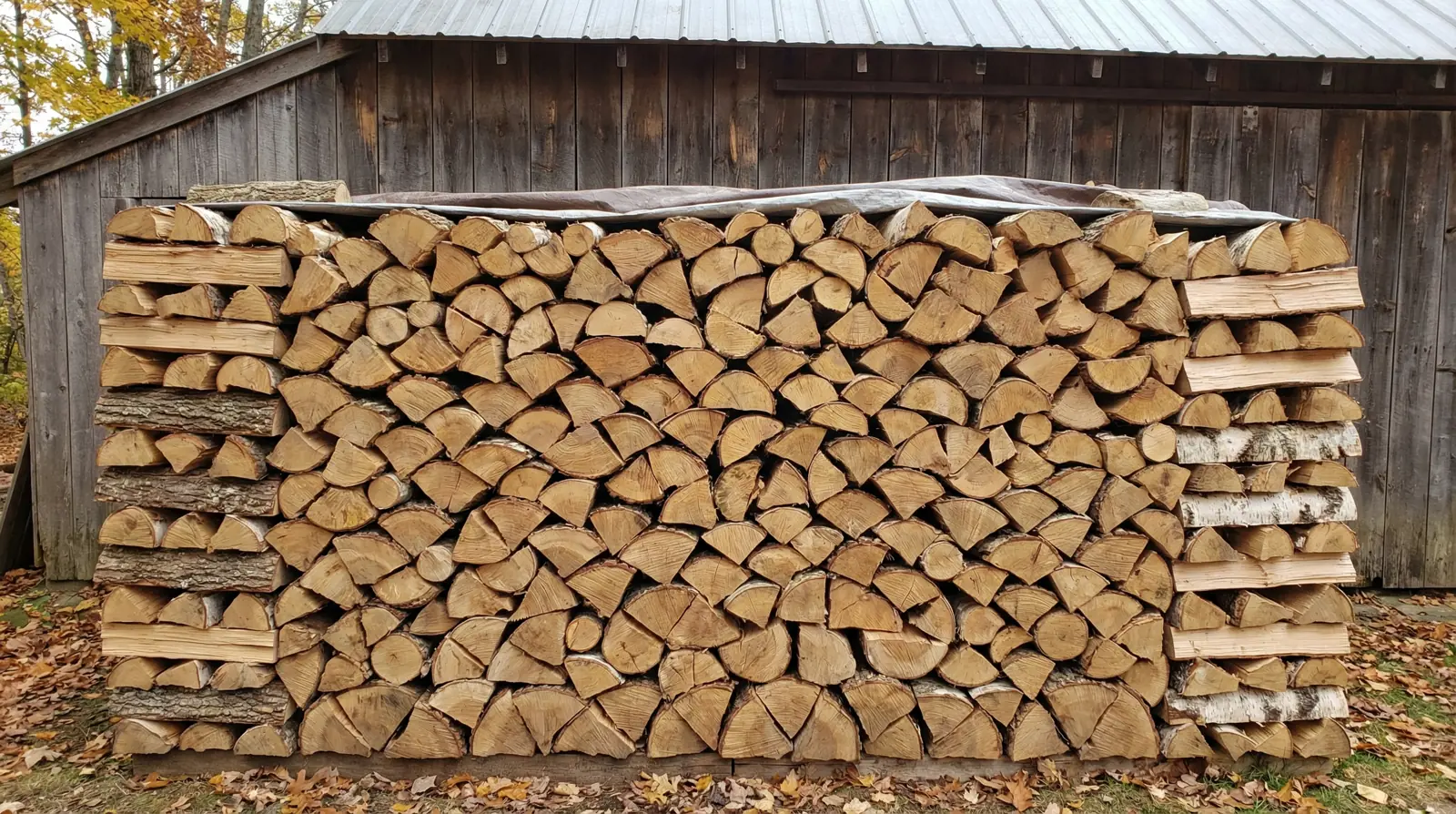
Quick answer: The average home using a wood stove as a primary heat source burns 3–5 cords of firewood per winter. If you use a fireplace for ambiance a few nights a week, you'll need about 1–1.5 cords for the season. One cord is a stack 4 feet wide × 4 feet tall × 8 feet long.
Get a personalized estimate, use our Firewood Calculator →
What Is a Cord of Firewood?
A cord is the standard unit for buying firewood. It's a stack that measures:
- 4 feet wide × 4 feet tall × 8 feet long
- Total volume: 128 cubic feet
- Actual wood (accounting for air space): about 80–90 cubic feet
You'll also encounter these terms when shopping:
- Face cord (rick): A stack 4 feet tall × 8 feet long, but only one row deep (typically 16 inches). That's roughly ⅓ of a full cord.
- Half cord: Exactly what it sounds like, 64 cubic feet stacked.
- Pickup truck load: A loosely thrown full-size truck bed holds about ⅓ to ½ cord. Don't let someone charge you full cord price for a truck bed.
How Much Firewood Do I Need? (By Usage)
Primary Heat Source (Wood Stove)
If your wood stove is your main heating source and you live in a cold climate (northern US, Canada), expect to burn 4–6 cords per winter season (October through March). In milder climates, 2–4 cords is typical.
Supplemental Heating
Using a wood stove or fireplace insert to supplement your furnace? Plan for 1.5–3 cords. You'll burn less because the central heat picks up the slack on the coldest days or when you're not home.
Occasional Fireplace Use
A few fires per week during winter for ambiance? 0.5–1.5 cords will get you through the season. Open fireplaces are inefficient (about 10–15% efficient vs. 70–80% for a good stove), so you burn more wood for less heat.
Fire Pit / Outdoor Use
A weekend campfire or fire pit uses about 20–40 lbs per evening. A face cord (⅓ cord) is plenty for a season of weekend fires.
BTU Ratings by Wood Type
Not all firewood gives the same heat. BTU (British Thermal Units) per cord varies dramatically by species. Higher BTU = more heat per piece of wood = less wood needed.
High-BTU Hardwoods (Best for Heating)
- Osage Orange: 32.9 million BTU/cord, the hottest burning firewood
- White Oak: 29.1 million BTU/cord
- Sugar Maple: 29.0 million BTU/cord
- Red Oak: 27.3 million BTU/cord
- Hickory: 27.7 million BTU/cord
- Ash: 24.2 million BTU/cord, excellent, easy to split, burns clean
Medium-BTU Woods
- Cherry: 20.4 million BTU/cord, smells great, good for fireplaces
- Birch: 20.8 million BTU/cord, burns fast, nice flame
- Elm: 20.0 million BTU/cord, hard to split but burns well
- Douglas Fir: 20.7 million BTU/cord, best softwood option
Low-BTU Woods (Avoid for Primary Heat)
- Pine: 15.7 million BTU/cord, burns fast, creates creosote buildup
- Poplar: 14.7 million BTU/cord, very soft, burns quickly
- Willow: 14.5 million BTU/cord, low heat, lots of smoke
- Spruce: 15.5 million BTU/cord, crackles, pops, shoots sparks
Bottom line: If you're buying firewood for heat, oak, maple, ash, and hickory give you the most bang for your buck. You'll burn 30–50% less wood compared to pine or poplar for the same heat output.
Firewood Math: A Real-World Example
Let's say you heat a 1,500 sq ft home in Pennsylvania with a modern wood stove (75% efficient) as your primary heat source. Winter runs about 5 months.
- Average heating need: ~60 million BTU for the season
- Using red oak (27.3 million BTU/cord, 75% efficient): 27.3 × 0.75 = 20.5 million usable BTU per cord
- 60 ÷ 20.5 = 2.9 cords
- Add 15% buffer: ~3.4 cords
If you used pine instead (15.7 million BTU/cord): 60 ÷ 11.8 = 5.1 cords. That's 50% more wood to process, stack, and carry inside. Wood species matters.
Seasoning: The Most Important Factor
Freshly cut ("green") wood contains 40–50% moisture. Properly seasoned firewood should be under 20% moisture. This matters because:
- Wet wood wastes energy boiling off water instead of heating your home
- Green wood produces 2–3× more creosote, a chimney fire hazard
- Seasoned wood gives you 30–40% more usable heat than green wood
How long to season: Most hardwoods need 6–12 months of drying time, split and stacked off the ground with good airflow. Oak can take 12–18 months. Ash and cherry dry faster (4–6 months).
How to tell it's ready: Check the ends of split logs, dry wood has visible cracks (checks), feels lighter, and makes a hollow "clunk" when two pieces are knocked together. A moisture meter ($20–$30) removes all guesswork.
Buying Tips
- Buy in spring or summer. Prices are 20–30% lower in the off-season, and you get months of free drying time.
- Insist on "full cord" pricing. Vague terms like "truckload" or "pile" are how sellers charge cord prices for face-cord amounts.
- Expect to pay: $200–$350 per cord for hardwood, $150–$250 for mixed or softwood. Prices vary hugely by region.
- Inspect before paying. Is it split? Seasoned or green? Mostly hardwood or full of pine? Ask questions.
- Stack it yourself. Delivery usually means dumped in your driveway. Budget time to stack it, about 1–2 hours per cord.
Storage Best Practices
- Stack off the ground on pallets, rails, or a gravel pad
- Cover the top to shed rain but leave the sides open for airflow
- Keep stacks at least 20 feet from the house (fire safety + pest prevention)
- Use oldest wood first, rotate your stock each season
- Bring only 1–2 days' worth inside at a time to avoid bringing insects into the house
Frequently Asked Questions
How many logs are in a cord?
It varies by log size, but a cord of 16-inch split firewood typically contains 600–800 pieces.
Can I burn softwood in a wood stove?
Yes, but it's not ideal. Softwoods like pine burn faster and produce more creosote. They're fine for starting fires or shoulder-season burning. Just get your chimney cleaned annually.
How often should I clean my chimney?
At least once per year, preferably before the burning season starts. If you burn more than 3 cords per season, consider a mid-season inspection too.
Calculate Your Firewood Needs →
Related: Shed Material Calculator · Ice Melt Calculator