How Much Lumber Do I Need for a Pergola?
· By DIY Calc
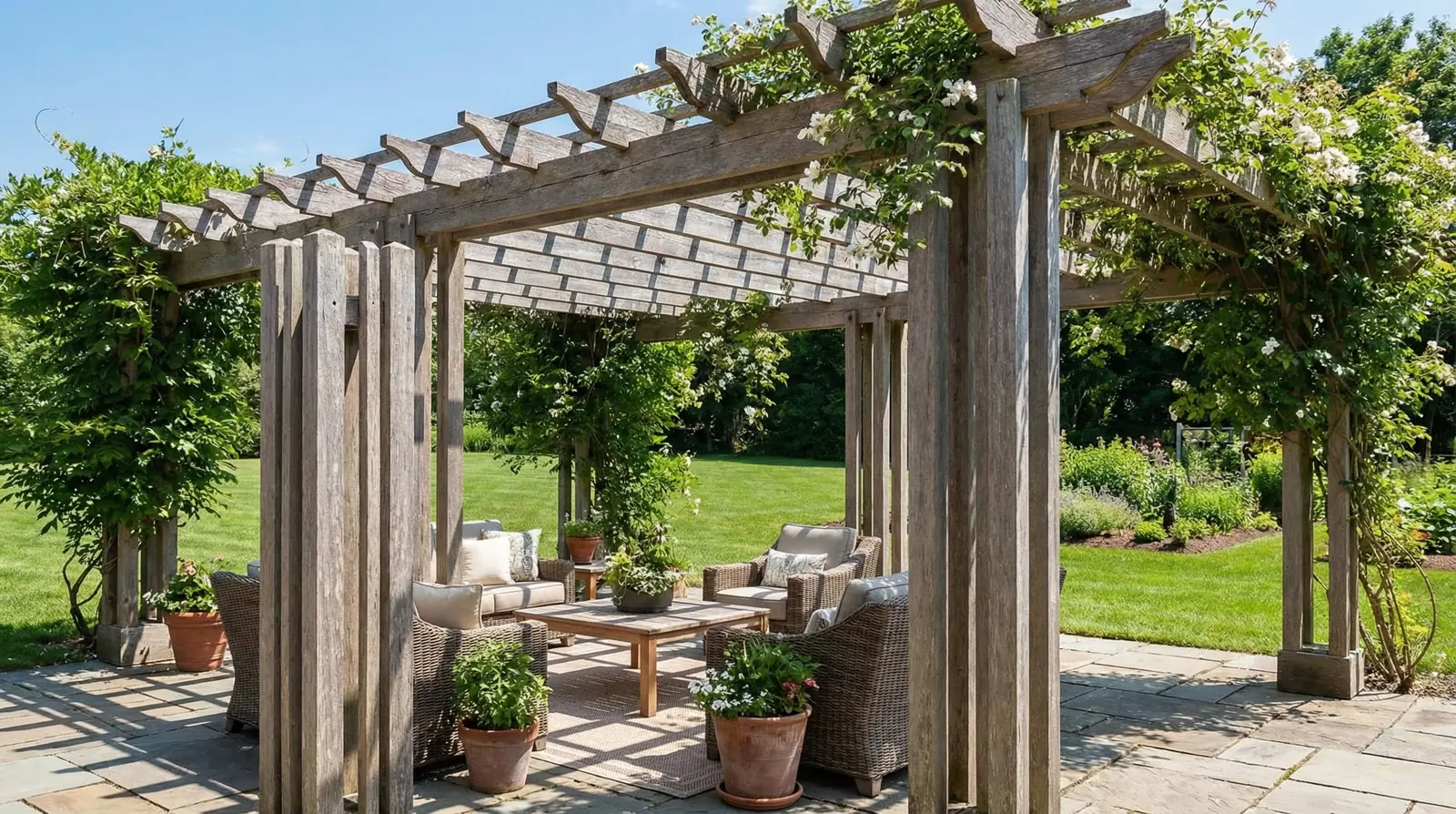
Quick answer: A standard 12×10 foot pergola needs 4–6 posts, 4 beams, 8–10 rafters, and 6–8 purlins, plus post brackets, lag bolts, and concrete for footings. Total materials typically run $800–$1,500 for pressure-treated lumber.
Skip the math, use our free Pergola Calculator →
Understanding Pergola Components
A pergola has five main structural elements, and understanding each one helps you buy the right amount of lumber without making extra trips to the store.
Posts are the vertical supports. Most pergolas use four posts (one at each corner), but larger spans need intermediate posts every 6–8 feet. Always use 6×6 posts for pergolas wider than 10 feet, 4×4 posts simply don't have enough structural capacity for wider spans.
Beams sit on top of the posts and run along the length of the pergola. These are typically doubled 2×8 or 2×10 boards bolted together and to the posts. For spans over 12 feet, step up to 2×10 beams.
Rafters run perpendicular to the beams, spanning the depth of the pergola. Use 2×6 rafters for depths up to 12 feet, and 2×8 for deeper pergolas. Standard spacing is 16 inches on center.
Purlins are the smaller cross pieces that sit on top of the rafters, running parallel to the beams. These are typically 2×4s spaced every 12–24 inches. They add visual interest and additional shade.
Footings are the concrete bases that anchor each post. Use 12-inch diameter sonotubes set at least 24 inches deep (below the frost line in your area). Each footing takes about 2 bags of 80-lb concrete.
The Lumber List Formula
Here's how to calculate each component by hand:
- Posts: Count corners (4) plus intermediate posts (1 for every 8ft of width beyond 8ft, times 2 sides). Length = height + 2ft for embedment.
- Beams: 4 boards total (doubled on each side). Length = pergola width.
- Rafters: (Width in inches ÷ rafter spacing) + 1. Length = depth + 2ft for overhang.
- Purlins: (Depth ÷ 2ft spacing) + 1. Length = width + 2ft for overhang.
- Concrete bags: ~2 bags (80 lb) per post footing.
Choosing the Right Wood
Pressure-treated pine is the most affordable option at $12–$20 per board. It resists rot and insects but needs staining for appearance. This is what most DIYers choose.
Cedar is naturally rot-resistant and beautiful, running $25–$40 per board. It weathers to a silver-gray if left untreated, or you can seal it to maintain the warm tone.
Redwood is the premium choice at $30–$50+ per board. Gorgeous natural color and excellent durability, but availability varies by region.
Hardware You'll Need
Don't forget the hardware, it's often overlooked in budget planning:
- Post brackets (1 per post), $8–$15 each
- Rafter hangers (2 per rafter), $3–$5 each
- Lag bolts (2 per post-to-beam connection), $1–$2 each
- Structural screws (4 per rafter + 1 per purlin-rafter joint)
Common Pergola Sizes and Costs
Here are ballpark materials costs for popular sizes using pressure-treated lumber:
- 8×8 ft: $500–$800
- 10×10 ft: $700–$1,100
- 12×10 ft: $800–$1,300
- 14×12 ft: $1,100–$1,800
- 16×14 ft: $1,400–$2,200
Permits and Code
Check your local building codes before starting. Many jurisdictions require a permit for structures over 200 square feet or those attached to the house. Setback requirements from property lines also apply.