How Many Retaining Wall Blocks Do I Need?
· By DIY Calc
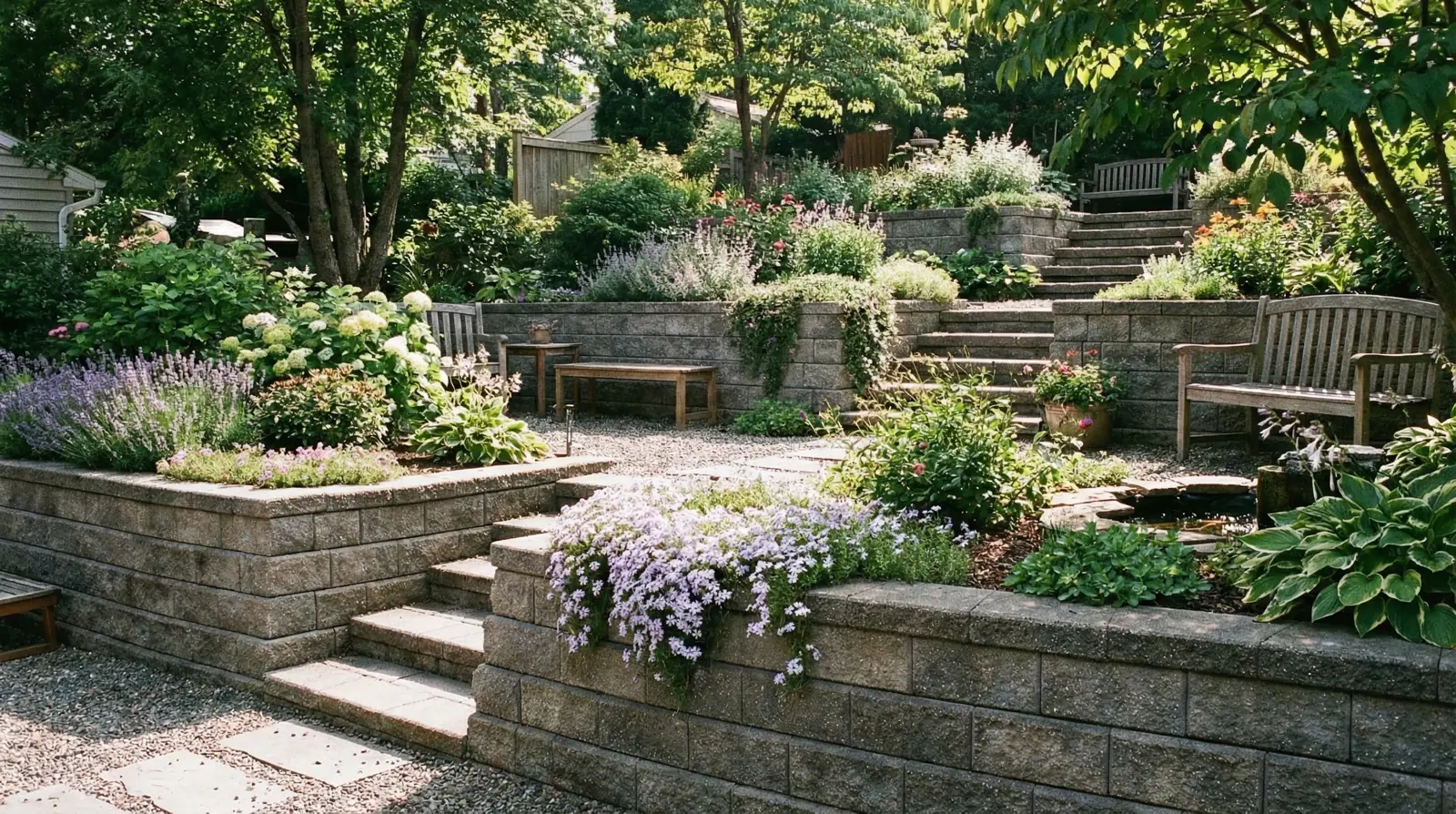
Quick answer: Divide wall length by block width for blocks per course, then multiply by total courses (including one buried base course). A 20-foot long, 3-foot high wall with 16" blocks needs about 120 blocks plus 15 cap blocks.
Skip the math, use our free Retaining Wall Calculator →
The Formula
- Blocks per course: Wall length (inches) ÷ block width (inches), round up
- Number of courses: Wall height (inches) ÷ block height (inches), round up
- Add buried base course: Add 1 more course for stability
- Total blocks: Blocks per course × total courses
- Cap blocks: Same as blocks per course (if using caps)
Example: 20ft Long × 3ft High Wall, 16×6×12 Blocks
Blocks per course: (20 × 12) ÷ 16 = 15 blocks
Visible courses: (3 × 12) ÷ 6 = 6 courses
Plus buried base: 7 courses total
Total blocks: 15 × 7 = 105 blocks
Cap blocks: 15 caps
Common Block Sizes
- Standard (12×4×8"): Smaller, lighter blocks. Good for short walls. About 30 lbs each.
- Large (16×6×12"): Most popular for DIY retaining walls. About 50 lbs each.
- XL (18×6×12"): Fewer blocks needed, premium look. About 65 lbs each.
- Small (8×4×12"): For garden borders and low walls. About 25 lbs each.
Don't Forget the Base and Drainage
The blocks are the most visible part, but what happens behind and below the wall determines whether it lasts 5 years or 50.
Gravel Base Trench
Dig a trench 6 inches deep and twice the block depth wide. Fill with compacted crushed gravel (not rounded stone). This provides drainage and a level surface for the first course.
Gravel Backfill
Behind the wall, fill with 12 inches of crushed gravel from the base to within 6 inches of the top. This prevents water pressure (hydrostatic pressure) from building up behind the wall, the #1 cause of retaining wall failure.
Drainage Pipe
Lay 4-inch perforated drain pipe at the base of the wall, behind the first course, surrounded by drainage aggregate. The pipe should daylight (exit) at the end of the wall or into a drainage area.
Setback and Batter
Retaining wall blocks are designed with a built-in setback, each course steps back about 3/4" to 1" from the course below. This lean (called "batter") uses gravity to resist the force of the soil behind the wall. Don't try to stack blocks perfectly vertical.
Adhesive
Apply landscape block adhesive between the top two courses and between the cap blocks and the top course. One tube covers about 10 linear feet. This prevents the top blocks from being knocked off by weather, animals, or people sitting on the wall.
When You Need an Engineer
DIY retaining walls should generally stay under 4 feet tall. Taller walls need:
- A building permit
- Engineering by a licensed professional
- Possible geogrid reinforcement
- Proper surcharge calculations (especially if there's a driveway, structure, or slope above)
Cost Estimates
- Blocks: $3–$6 each depending on size and style
- Cap blocks: $4–$8 each
- Gravel (per cubic yard): $35–$60 delivered
- Drainage pipe (per 10ft): $8–$15
- Adhesive: $5–$8 per tube
A typical 20-foot × 3-foot wall costs $500–$1,000 in materials for a DIY build.