How Much Epoxy Resin Do I Need?
· By DIY Calc
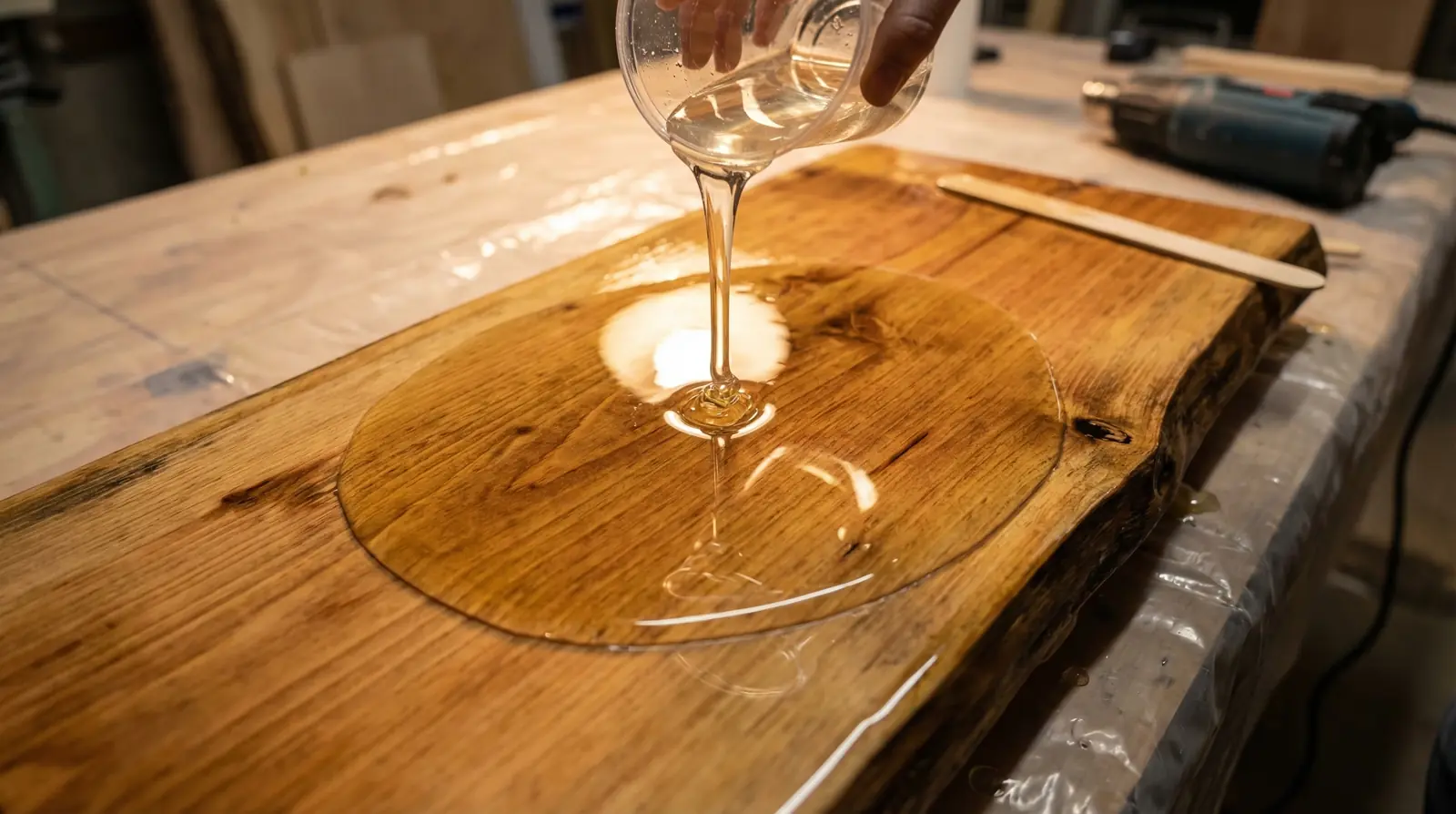
Quick answer: Multiply your length × width × depth (all in inches), then divide by 231 to get gallons. A typical 4-foot × 2-foot countertop with a 1/8" flood coat needs about 0.67 gallons of mixed epoxy resin. Always mix 10% extra for waste and self-leveling.
Skip the math, use our free Epoxy Resin Calculator →
The Formula (Step by Step)
Epoxy resin is sold by volume, so you need to calculate the total volume of your pour. Here's the simple formula:
- Measure your surface, length and width in inches
- Decide your pour depth, typically 1/8" for a flood coat
- Calculate cubic inches, length × width × depth
- Convert to gallons, divide cubic inches by 231 (there are 231 cubic inches in a US gallon)
- Multiply by coats, most projects need a seal coat + 1-2 flood coats
- Add 10% extra, for mixing cups, stir sticks, and self-leveling overflow
Coverage Rate Quick Reference
These are approximate coverage rates for mixed epoxy (resin + hardener combined):
- Seal coat (very thin): 1 gallon covers ~24 sq ft
- Flood coat at 1/16": 1 gallon covers ~24 sq ft
- Flood coat at 1/8": 1 gallon covers ~12 sq ft
- Deep pour at 1/4": 1 gallon covers ~6 sq ft
- Deep pour at 1/2": 1 gallon covers ~3 sq ft
These numbers assume a flat, sealed surface. Porous or rough wood will absorb more resin, especially on the first coat.
Real-World Examples
Example 1: Kitchen Countertop
A countertop that's 8 feet × 2 feet with a seal coat + one 1/8" flood coat:
- Surface area: 96" × 24" = 2,304 sq inches (16 sq ft)
- Seal coat: ~0.67 gallons
- Flood coat at 1/8": 96 × 24 × 0.125 = 288 cubic inches ÷ 231 = 1.25 gallons
- Total: ~1.92 gallons + 10% = ~2.1 gallons
Example 2: River Table
A river table that's 6 feet × 18 inches wide with a 1.5" deep river channel that's 4" wide down the center:
- River channel: 72" × 4" × 1.5" = 432 cubic inches ÷ 231 = 1.87 gallons
- Top flood coat (full surface): 72" × 18" × 0.125" = 162 cubic inches ÷ 231 = 0.70 gallons
- Total: ~2.57 gallons + 10% = ~2.8 gallons
Example 3: Garage Floor Coating
A 2-car garage floor, 20 ft × 20 ft (400 sq ft), with 2 coats:
- At ~12 sq ft per gallon per coat: 400 ÷ 12 = ~33.3 gallons per coat
- Two coats: ~66.6 gallons + 10% = ~73 gallons
- This is why floor epoxy is sold in bulk kits!
Seal Coat vs. Flood Coat
Understanding the difference is critical to getting a bubble-free finish:
A seal coat is a very thin layer brushed or rolled onto porous surfaces (especially wood) before the main pour. It seals air pockets in the wood grain that would otherwise release bubbles into your flood coat. Let it cure for 4-6 hours before pouring your flood coat on top.
A flood coat is the main self-leveling layer, typically 1/8" thick. You pour it onto the surface and let it spread. Use a spreader or foam brush to guide it to edges, then pop bubbles with a propane torch or heat gun.
Mixing Ratios Matter
Most epoxy systems use either a 1:1 or 2:1 ratio of resin to hardener by volume. This means:
- 1:1 ratio: If you need 1 gallon total, mix 1/2 gallon resin + 1/2 gallon hardener
- 2:1 ratio: If you need 1.5 gallons total, mix 1 gallon resin + 0.5 gallon hardener
Always measure precisely. An incorrect ratio leads to a sticky, soft, or uncured finish that can't be fixed, you'd have to scrape it all off and start over.
Temperature and Working Time
Epoxy is chemistry, and temperature affects everything:
- Ideal range: 70–80°F. This gives you the best flow and cure.
- Below 60°F: Epoxy thickens, doesn't self-level well, and may not cure properly
- Above 85°F: Working time drops dramatically, you may only have 10-15 minutes
- Standard working time: 20–45 minutes at room temperature
Mix in small batches if you're covering a large area. A large batch generates more heat (exothermic reaction), which accelerates curing and shortens your working time.
Common Mistakes to Avoid
- Not sealing porous surfaces first, leads to endless bubbles rising through your flood coat
- Pouring too thick with standard epoxy, generates excessive heat, can crack or yellow
- Mixing too fast, whipping air into the epoxy creates micro-bubbles
- Not buying enough, running short mid-pour creates visible lines and seams
- Working in a dusty area, dust settles into wet epoxy and gets trapped forever
- Ignoring the ratio, even small deviations cause permanent soft spots
How Much Does Epoxy Resin Cost?
Prices vary widely by quality and type:
- Budget table-top epoxy: $30–50 per gallon kit
- Premium table-top epoxy: $60–90 per gallon kit
- Deep-pour epoxy: $50–80 per gallon kit
- Floor coating epoxy: $40–70 per gallon (sold in large kits)
Don't cheap out on epoxy, low-quality products yellow faster, cure softer, and are harder to work with. For furniture and countertops, invest in a reputable brand.