Deck Railing Calculator: Balusters, Spacing & Cost Estimator
· By DIY Calc
Disclosure: Contains Amazon affiliate links. As an Amazon Associate DIY Calc earns from qualifying purchases at no extra cost to you.
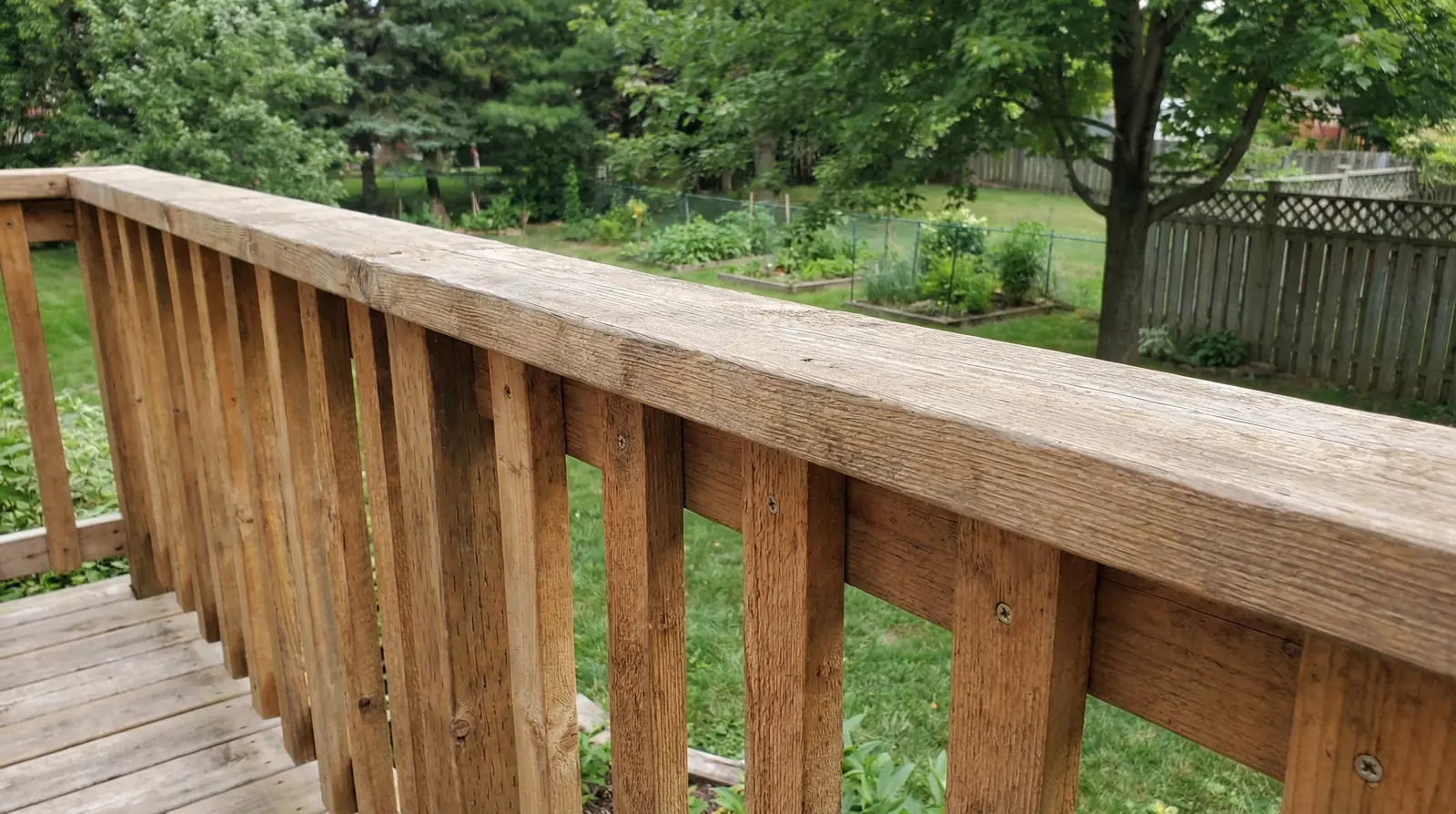
Quick answer: For standard 1.5-inch square balusters with the code-required maximum 4-inch gap, you need approximately one baluster every 5.5 inches, that's roughly 13 balusters per 6-foot railing section. Posts go every 6–8 feet.
Get exact counts, use our Deck Railing Calculator →
Building Code Requirements (Don't Skip This)
Deck railings aren't just decorative, they're a safety feature regulated by building codes. Here's what the IRC (International Residential Code) requires:
- Railing required: On any deck surface more than 30 inches above grade
- Railing height: Minimum 36 inches for residential decks (42 inches in some jurisdictions and for commercial)
- Baluster spacing: No gap larger than 4 inches, a 4-inch sphere must not pass through
- Bottom gap: No more than 4 inches between the deck surface and the bottom rail
- Load resistance: Railing must withstand 200 lbs of force at the top rail
- Post spacing: Maximum 6–8 feet apart (varies by jurisdiction and post attachment method)
Always check local codes. Your jurisdiction may have stricter requirements than the IRC baseline.
The Baluster Spacing Formula
Here's how to calculate balusters for any railing section:
- Measure the section length, distance between posts (in inches)
- Determine baluster width, typically 1.5 inches for standard wood balusters
- Choose your gap, 3.5 inches is common (stays under the 4-inch max)
- Calculate: Number of balusters = (section length − gap) ÷ (baluster width + gap)
- Round up, always round up to the next whole number (more balusters = smaller gaps = more compliant)
Example: 72-Inch Section, 1.5" Balusters, 3.5" Gaps
(72 − 3.5) ÷ (1.5 + 3.5) = 68.5 ÷ 5 = 13.7 → 14 balusters
Actual gap: (72 − (14 × 1.5)) ÷ (14 + 1) = (72 − 21) ÷ 15 = 3.4 inches
Railing Material Options
Pressure-Treated Wood
The most affordable option. 2×2 balusters, 2×4 rails, 4×4 posts. Costs about $15–$25 per linear foot installed. Needs staining or painting every 2–3 years. Lasts 15–20 years with maintenance.
Cedar or Redwood
Naturally rot-resistant with a beautiful appearance. Costs $25–$40 per linear foot. Less prone to warping than pressure-treated. Weathers to a silver-gray if left unstained.
Composite (Trex, TimberTech, Fiberon)
Low-maintenance, won't rot, splinter, or need painting. Costs $35–$60 per linear foot. Comes in pre-made kits with matching balusters. Best value over 20+ years due to zero maintenance.
Aluminum Balusters
Sleek, thin profile maximizes the view. Often used with wood or composite rails. Aluminum round balusters are about $2–$4 each. Won't rust, rot, or need painting. Very popular upgrade over wood.
Cable Railing
Stainless steel cables run horizontally between posts. Modern, minimalist look with unobstructed views. Costs $50–$100+ per linear foot. Cable railing kits include the wire, tensioners, and end hardware, posts sold separately. Posts must be beefier (and closer together) to handle cable tension.
Glass Panels
Tempered glass panels between posts for maximum visibility. Premium option at $75–$150+ per linear foot. Stunning on waterfront or scenic decks. Requires regular cleaning.
Materials List for a Typical Deck Railing
For a 12×16 deck with railing on three sides (approximately 40 linear feet):
- Posts: 8–10 pieces of 4×4 (or post sleeves if using composite)
- Top rails: 40 linear feet of 2×4 or composite rail
- Bottom rails: 40 linear feet of 2×4 or composite rail
- Balusters: ~90 pieces (2×2×36" wood or composite/aluminum)
- Post caps: 8–10 caps ($5–$20 each, decorative option)
- Post brackets: Heavy-duty post mount brackets ($15–$40 each)
- Screws: 2–3 lbs of stainless steel or coated exterior deck screws
Installation Steps
1. Install Posts First
Posts are the backbone of your railing system. The two main attachment methods:
- Through-bolted (notched): Post is notched and bolted through the rim joist with ½" carriage bolts. Strongest method.
- Surface-mounted brackets: Metal brackets bolt to the deck surface and rim joist. Easier to install. Use heavy-duty brackets rated for the load.
Plumb each post with a level before tightening. A crooked post means a crooked railing.
2. Cut and Attach Rails
Top and bottom rails connect between posts. Measure each section individually, post spacing is rarely perfectly consistent. Cut rails to fit snug between posts or use rail connectors for a clean joint.
3. Install Balusters
Mark your spacing on the bottom rail first using a spacer jig (cut a scrap block to your gap width). Attach balusters to both top and bottom rails with screws, two screws per connection point for strength.
4. Add Top Cap Rail
A flat 2×6 or composite cap rail on top creates a comfortable surface for resting drinks and leaning. Miter the corners at 45 degrees. This is what turns a functional railing into a finished one.
5. Add Post Caps and Trim
Post caps protect the end grain from water and add a polished look. Solar post caps ($15–$30 each) add ambient lighting at no electrical cost.
Common Mistakes to Avoid
- Weak post attachment. The #1 railing failure. Posts must be bolted, not just screwed. Use at least two ½" bolts per post.
- Gaps over 4 inches. Measure carefully. Inspectors will check with a 4-inch ball. Fail this and you're redoing balusters.
- Wrong screws. Standard drywall or interior screws will rust. Use stainless steel or coated exterior screws rated for treated lumber.
- Not pre-drilling. Hardwood and composite balusters split easily. Pre-drill every hole, a countersink drill bit set makes this fast and keeps screw heads flush.
Material Cost Comparison: Wood vs Composite vs Cable
The material you choose drives both upfront cost and long-term maintenance. Here's how the main options compare on a typical 40-linear-foot deck (posts included):
| Material | Materials Cost / LF | 40 LF Total (materials) | Maintenance | Lifespan |
|---|---|---|---|---|
| Pressure-treated wood | $12–$22 | $480–$880 | Stain/seal every 2–3 yr | 15–20 yr |
| Cedar / Redwood | $22–$38 | $880–$1,520 | Seal every 3–5 yr | 20–30 yr |
| Composite (Trex/TimberTech) | $30–$55 | $1,200–$2,200 | Annual wash only | 25–30 yr |
| Aluminum balusters + wood/composite rail | $25–$45 | $1,000–$1,800 | Minimal (no paint/rust) | 20–25 yr |
| Cable railing | $50–$100+ | $2,000–$4,000+ | Tension re-check annually | 30+ yr |
| Tempered glass panels | $75–$150+ | $3,000–$6,000+ | Regular cleaning | 20–25 yr |
Labor adds $15–$35 per linear foot to most materials. Composite breaks even vs. pressure-treated within 8–12 years when you factor in stain/seal costs.
Deck Stair Railing: Code Requirements & Baluster Math
Stair railings follow different rules than flat deck railings, and they're the section DIYers most often get wrong on inspection. Here's what changes on stairs:
Handrail vs. Guardrail: Know the Difference
On stairs, you need two distinct things:
- Handrail: The graspable rail you hold while walking. IRC requires it to be 34–38 inches measured vertically from the stair nosing (not from the tread surface, from the nosing). It must be continuous from the top riser to the bottom riser. Graspable means a round profile 1¼"–2" diameter, or a similar shape that allows a full grip.
- Guardrail: If the open side of the stair is more than 30 inches above grade, a guardrail (baluster system) is required on that open side, same 4-inch sphere rule as the deck railing.
Many deck stairs need both: a graspable handrail on the wall side and a baluster guardrail on the open side.
Baluster Spacing on Stairs: The Angled Check
The 4-inch maximum gap rule still applies on stairs, but the measurement changes. On a sloped stair rail, the code check is performed with the 4-inch sphere at the angle of the stairs, which means balusters must be closer together than on a flat rail to pass the same test. In practice:
- With vertical balusters on stairs, use a 3.5-inch maximum gap (not 4 inches) to account for the increased horizontal gap created by the slope.
- Alternatively, use angled baluster shoes (pre-cut shoe blocks matched to your stair pitch) so balusters sit plumb while the shoe handles the angle.
- Calculate stair balusters based on the horizontal run of each stair section, not the diagonal slope length.
Stair Post Spacing
Posts on stair stringers should be spaced no more than 4 feet apart, not the 6–8 feet allowed on a flat deck. Stairs experience significant lateral force from people grabbing the rail to stabilize, shorter post spacing directly improves the feel of a safe, solid railing. Place posts at the top, the bottom, and every 3–4 feet of stair run.
Stair Railing Height at the Top
Where the stair railing meets the deck railing, the transition height must connect smoothly. If your deck railing is 36 inches and your stair handrail terminates at 34–38 inches above the stair nosing, you'll need a connecting rail section that steps down gradually. This is typically accomplished with a "gooseneck" fitting (a curved connector piece) or a mitered angled section cut to match the stair pitch.
The 6-Inch Rule at the Bottom
The bottom baluster on the first step of a stair railing must be within 6 inches of the stair tread, any larger a gap and children can get feet or heads caught between the bottom baluster and the stair. This often requires a longer starting baluster or a kickboard at the base of the stair railing section.
Railing Inspection Checklist
Before calling for inspection, or before signing off on work a contractor did, run through this checklist:
| Item | Requirement | How to Check |
|---|---|---|
| Railing height | 36" min (42" some areas) | Measure straight up from deck surface to top of rail cap |
| Baluster spacing | No gap >4" | Try to pass a 4" round ball through every gap |
| Post attachment | 200 lb lateral load | Push hard on each post, no rocking or play |
| Bottom rail gap | Max 4" from deck surface | Measure gap between deck and bottom rail at lowest point |
| Post spacing | Max 6–8 ft (flat), 4 ft (stairs) | Measure center-to-center between posts |
| Stair handrail height | 34–38" from nosing | Measure vertically from stair nosing to top of handrail |
| Handrail graspability | 1¼"–2" round or equivalent | Grip it, your hand should wrap fully around it |
| Stair bottom baluster gap | Max 6" from first tread | Measure from first tread surface to bottom of lowest baluster |
Always verify requirements with your local building department, IRC minimums are the national baseline, but jurisdictions regularly adopt stricter local amendments.
Frequently Asked Questions
How much does deck railing cost?
Materials only: $15–$25/ft for wood, $35–$60/ft for composite, $50–$100+/ft for cable or glass. A typical deck (40 linear feet of railing) costs $600–$2,400+ in materials.
Can I use 2×2 balusters?
Yes, 2×2 (actual 1.5" × 1.5") is the standard residential baluster size. Some people use 1×1 aluminum balusters for a sleeker look, just confirm they meet your local load requirements.
Do I need a permit for deck railing?
If you're replacing railing on an existing deck, usually no permit is needed. If you're building a new deck, the railing is part of the deck permit. Check with your local building department.
Calculate Your Railing Materials →
Railing Products Worth Having
- Aluminum balusters (round, black), the fastest upgrade from wood, no paint required, rust-proof
- Heavy-duty 4×4 post base brackets, surface-mount to the rim joist; rated for railing loads
- Solar LED post caps (4×4 or 5×5), no wiring, adds evening ambiance and safety lighting
- Stainless steel exterior deck screws, won't rust, won't streak pressure-treated wood
- Baluster spacer jig, ensures consistent spacing on every section without measuring each one individually
Related: Fence Calculator · Concrete Calculator · Fence Board Guide · Best Cordless Drills 2026